
What Causes a Brain with Vestibular Migraine to Label Everything as a Threat?


When vestibular migraine strikes, it alters how the central nervous system processes movement, balance, and your perception of the world around you. For many people, this shift is so overwhelming that navigating an open space or enduring normal daily visual movement feels like existing on an entirely different planet. To understand why your brain begins to label everyday environments as an absolute threat, we have to look closely at a hyperactive vestibular system, sensory mismatch, and the survival choices your brain makes when it feels unsafe.
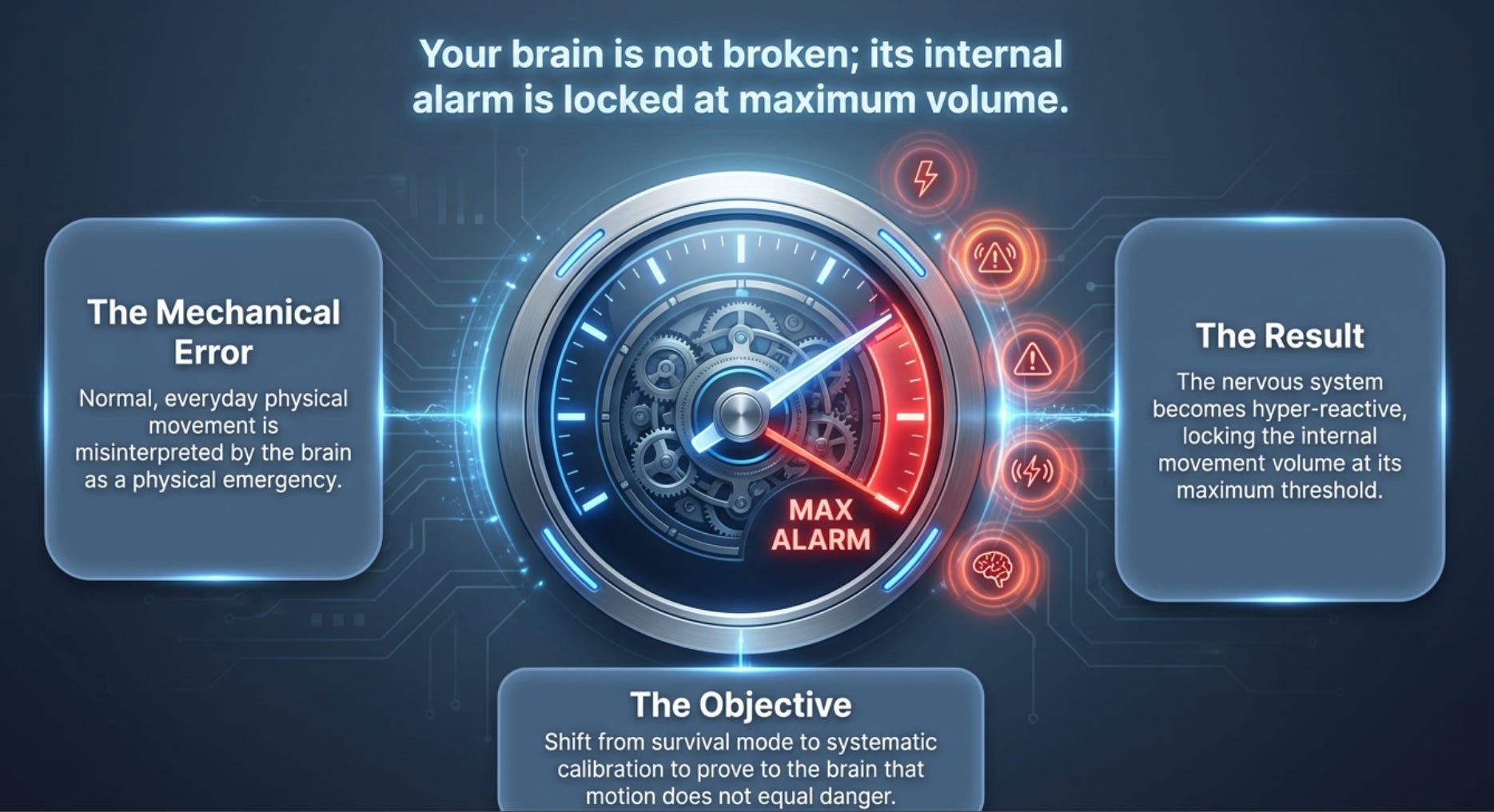
The Brain’s Volume Knob Is Turned Up Too High
The inner ear balance system is supposed to act like a steady microphone, sending quiet, smooth data to the brain about where your head is in space. In conditions like vestibular migraine, Persistent Postural-Perceptual Dizziness (PPPD), and Mal de Débarquement Syndrome (MdDS), that volume knob gets turned all the way up into a screeching feedback loop.
This creates a highly sensitive, hyperactive vestibular system. Because the internal balance filters are turned down, your brain registers standard, subtle head movements as massive shifts in reality. Even when sitting completely still, the brain reads this amplified internal noise as constant rocking, swaying, or dropping. Receiving this non-stop flood of exaggerated motion data forces the central nervous system into a permanent fight-or-flight state, labeling the physical world as an immediate danger.
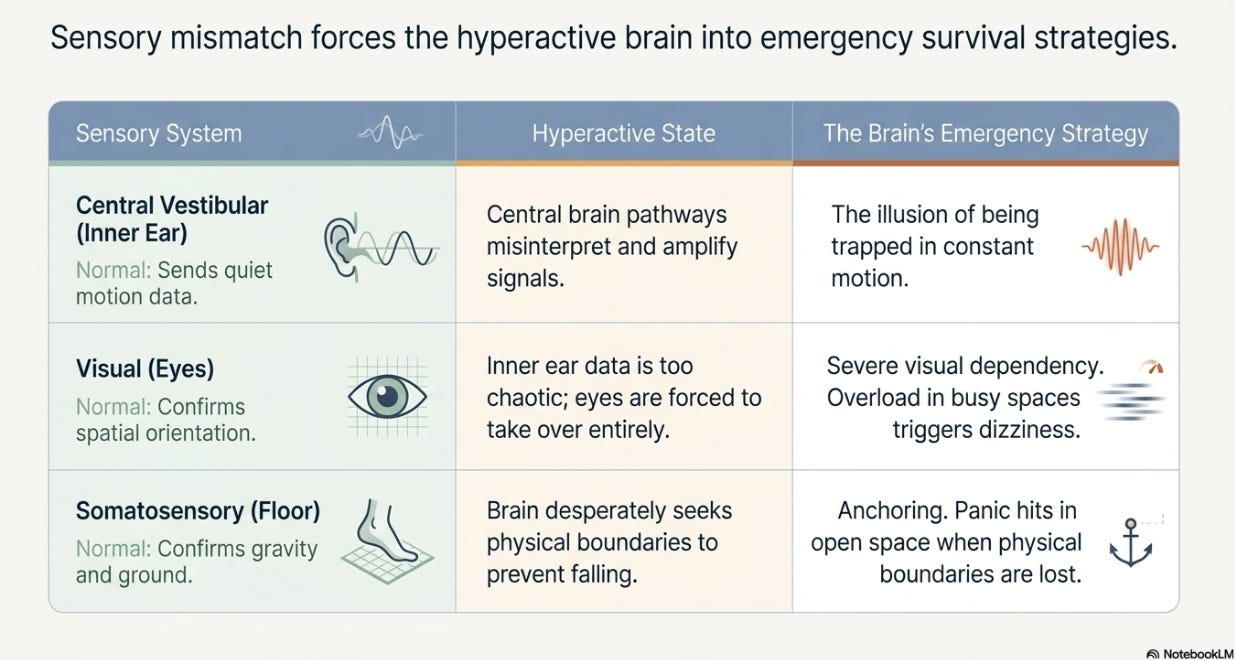
The Three Balance Systems and Sensory Mismatch
The brain relies on a team of three systems to keep you upright and steady: the vestibular system (inner ear), the visual system (eyes), and the somatosensory system (the physical feel of your feet and joints on the floor). Under normal conditions, these three systems agree. In a hyperactive brain, they completely mismatch, causing the brain to adopt emergency survival strategies:
A Malfunctioning Central Vestibular Component: The inner ear organs send normal signals, but the central brain pathways misinterpret and amplify them, making you feel like you are trapped in a constant state of motion.
A Strong Visual Component: Because the inner ear data is so chaotic, the brain forces your eyes to take over and figure out which way is up. This leads to severe visual dependency. When you look at busy environments, supermarkets, or even a sunny porch, the sheer amount of moving visual data overloads your hyper-sensitive brain, triggering intense dizziness.
A Strong Somatosensory Component: To stop you from falling, the brain anchors itself to the firmest physical surfaces available. It depends heavily on the physical touch of the floor or a chair. The moment you step into an open space where those close boundaries disappear, a wave of panic hits because your brain feels completely ungrounded.
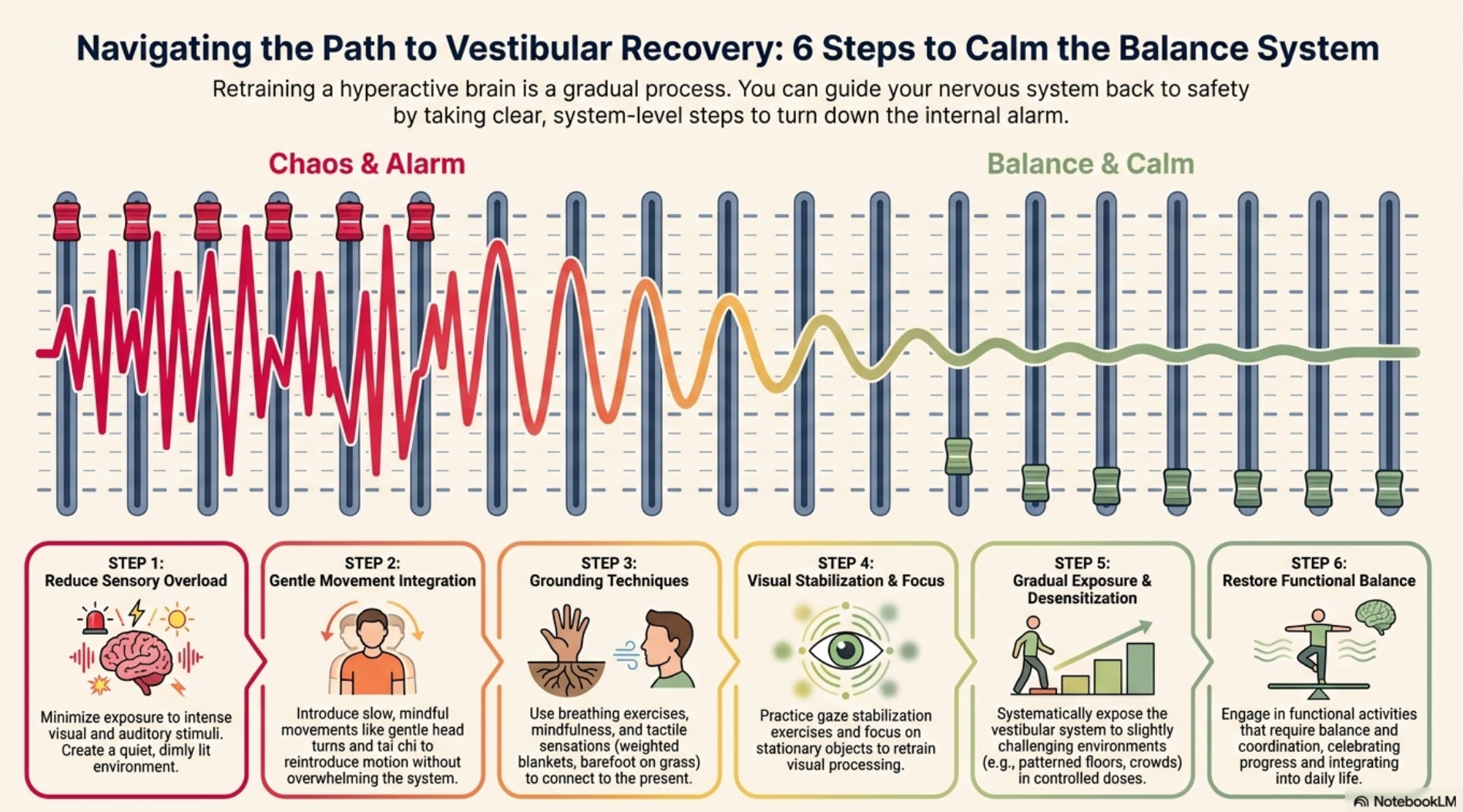
Six Practical Steps to Calm Your Balance System
Retraining a hyperactive brain is a gradual process. You can guide your nervous system back to safety by taking clear, bulleted steps to turn down the internal alarm.
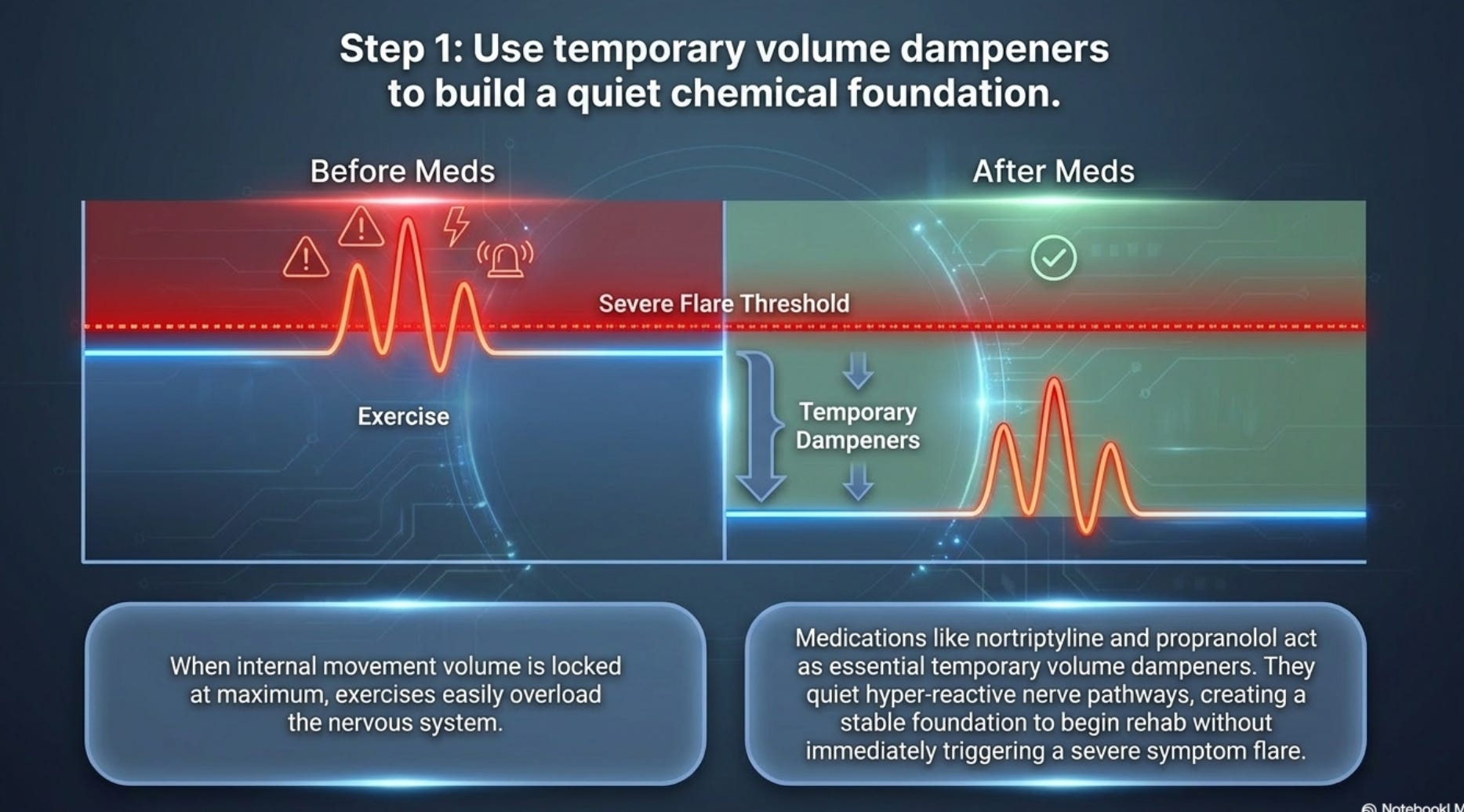
Build a Quiet Chemical Foundation
When your internal movement volume is locked at its maximum, performing exercises can easily overload your nervous system. Medications specific to migraines can serve as essential, temporary volume dampeners. They help quiet the hyper-reactive nerve pathways, creating a stable foundation so that you can begin rehabilitation without immediately triggering a severe symptom flare. Speak with your medical provider specifically about these medications.
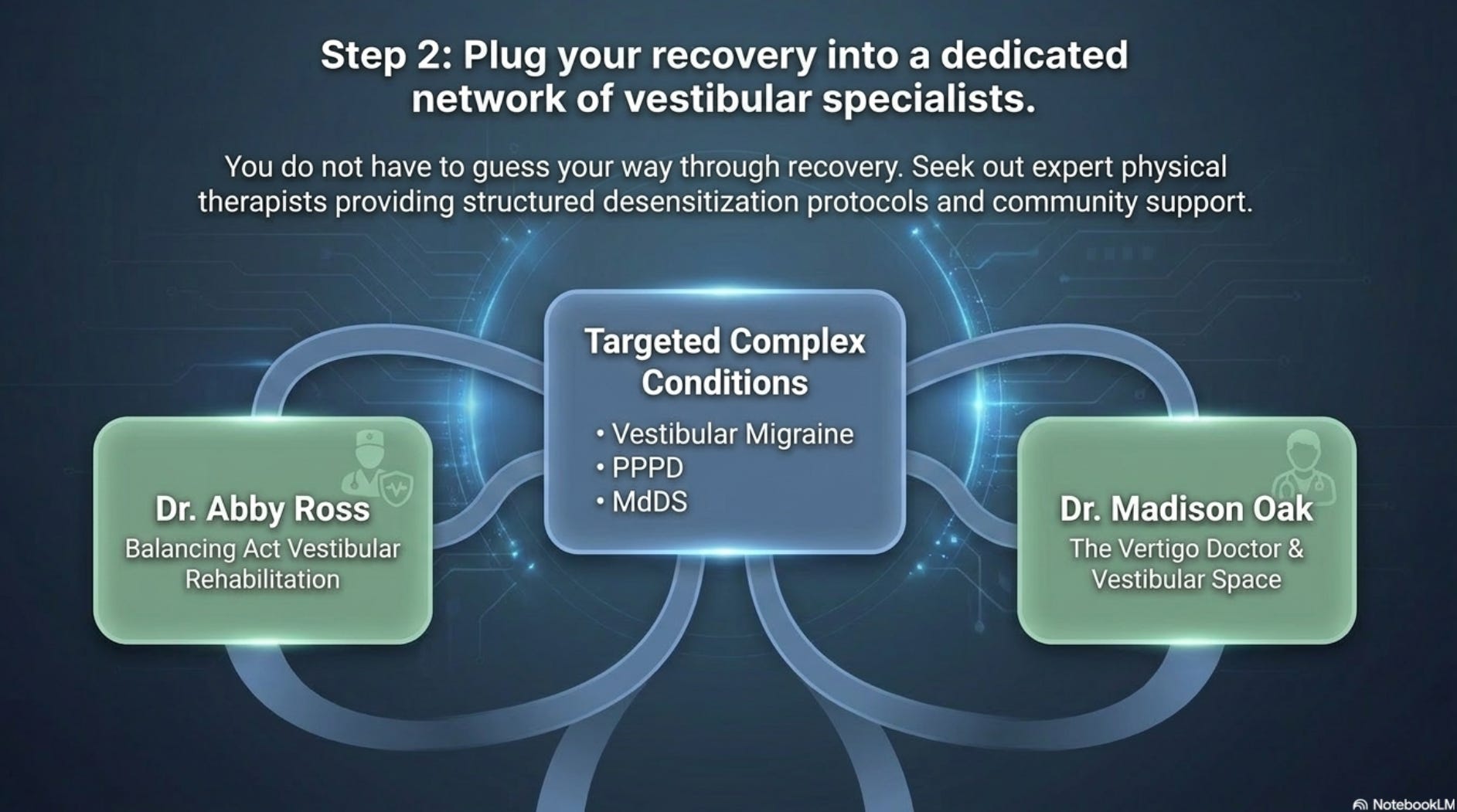
Connect with Dedicated Vestibular Specialists
You do not have to guess your way through this recovery. Seeking out expert physical therapists who specialize in complex vestibular migraine, PPPD, and MdDS is vital.
Connecting with specialized online programs and expert clinics—such as Dr. Abbie Ross at Balancing Act Vestibular Rehabilitation or Dr. Madison Oak at The Vertigo Doctor and Vestibular Space—provides the exact, structured desensitization protocols and professional community support needed to navigate recovery.
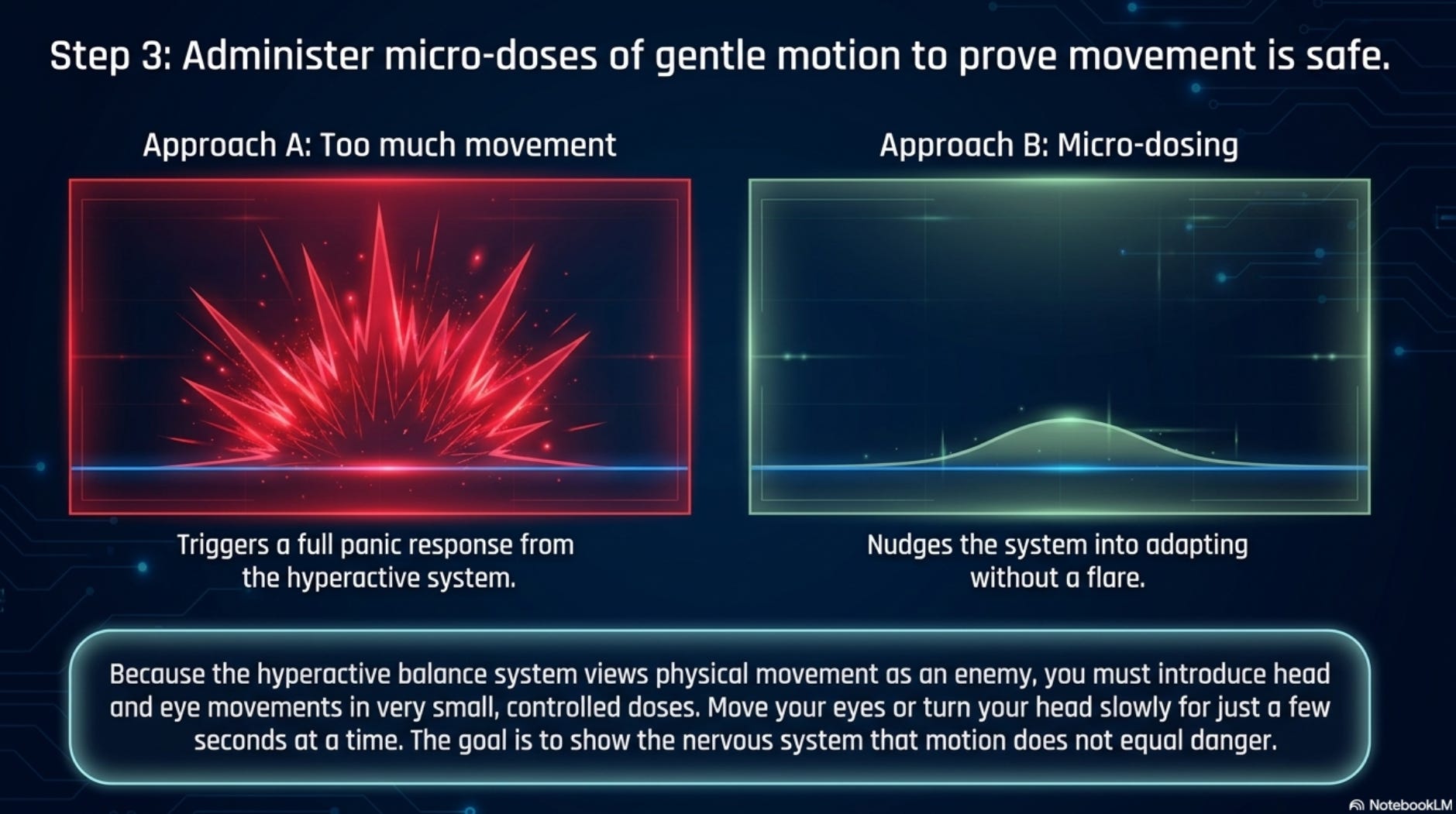
Use Micro-Doses of Gentle Motion
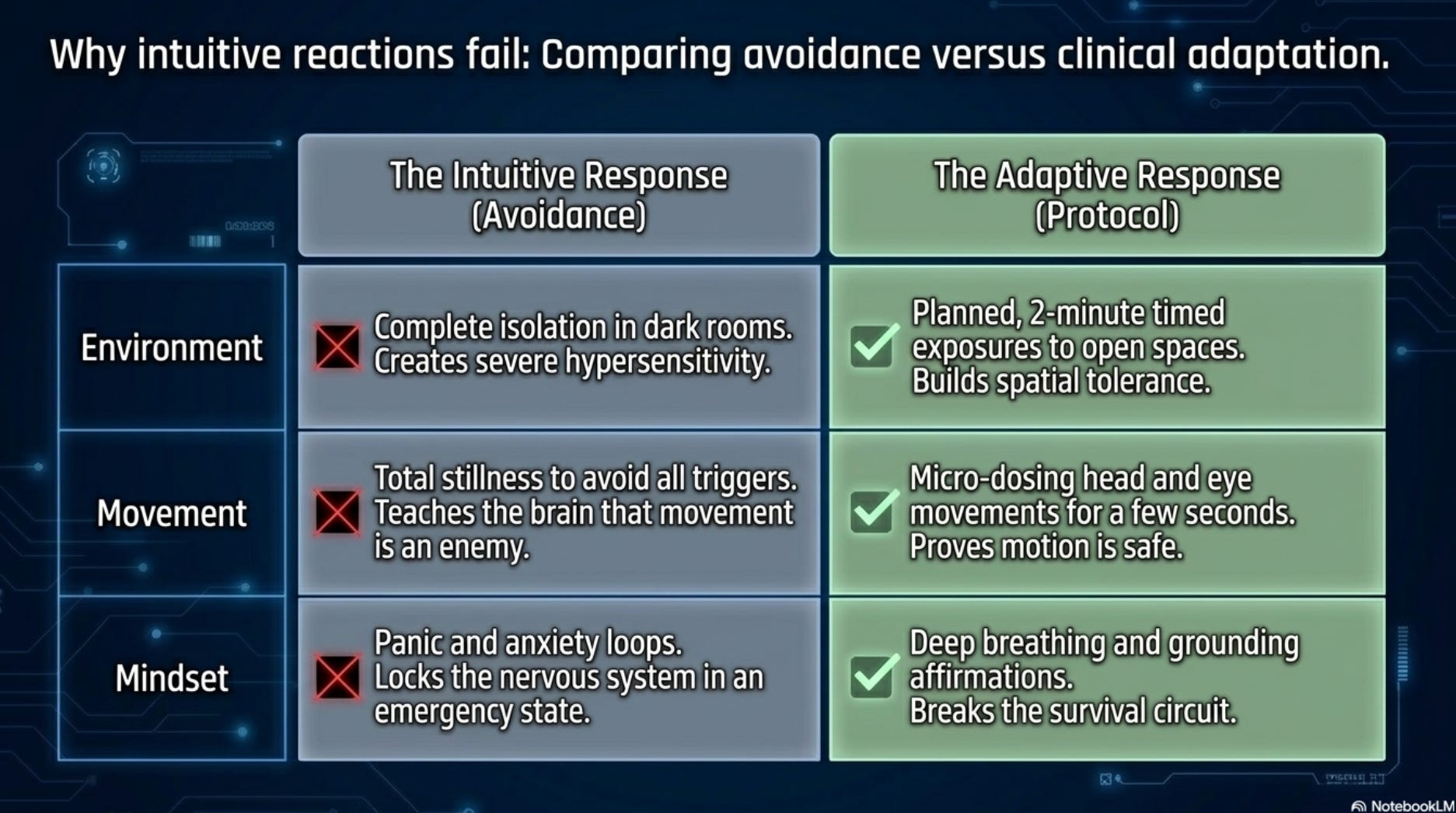
A hyperactive balance system views physical movement as an enemy. To break this cycle, you must introduce head and eye movements in very small, controlled doses. Moving your eyes or turning your head slowly for just a few seconds at a time shows your nervous system that motion does not equal danger. The goal is to nudge the balance system into adapting without triggering a full panic response.
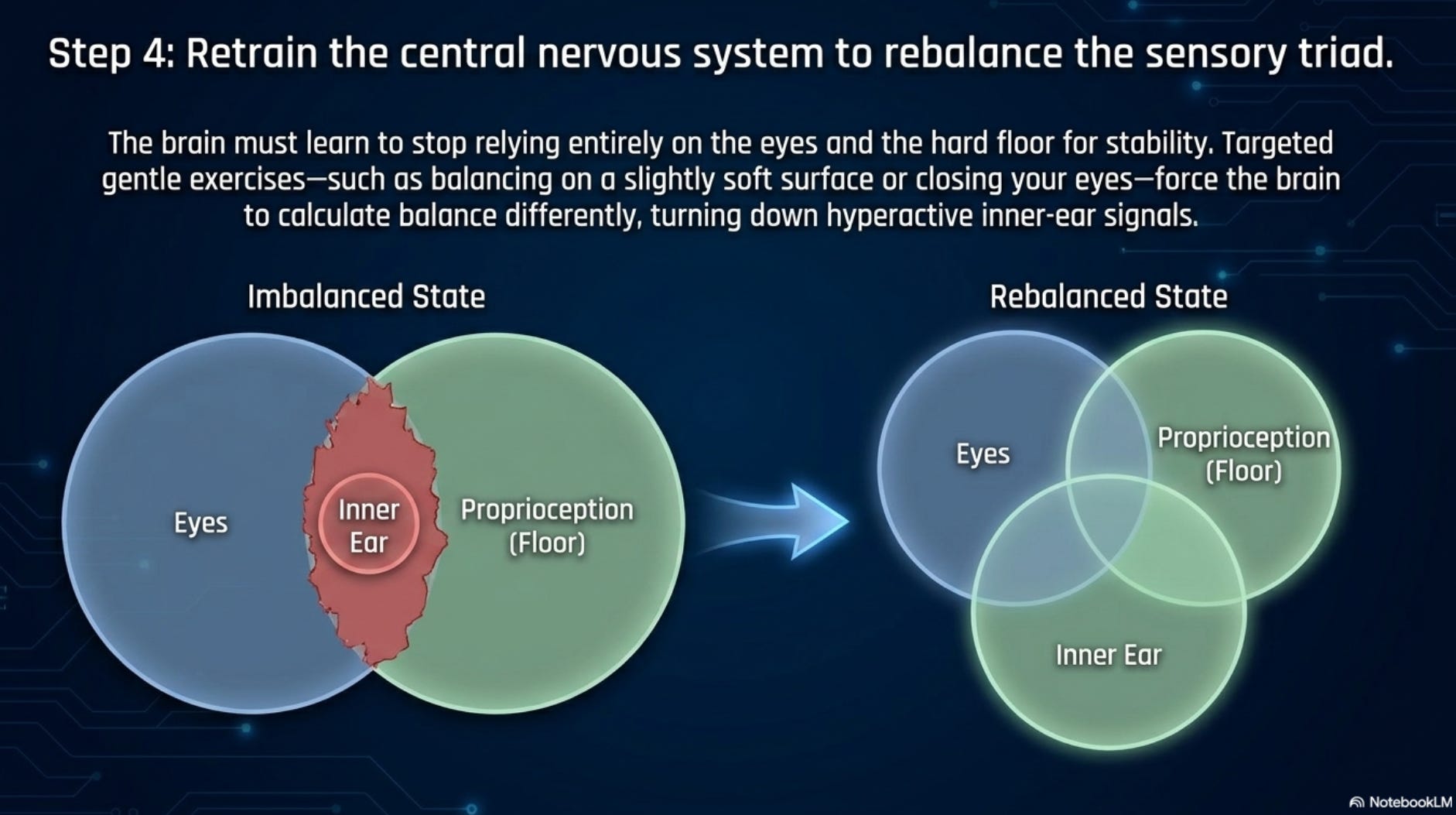
Retrain and Rebalance Your Senses
Your brain must learn to stop relying entirely on your eyes and the floor for stability. Targeted, gentle exercises—such as balancing on a slightly soft surface or practicing slow movements with your eyes closed—force the brain to change how it calculates balance. This actively trains the central nervous system to turn down the hyperactive inner-ear signals and to use all three balance systems equally again.
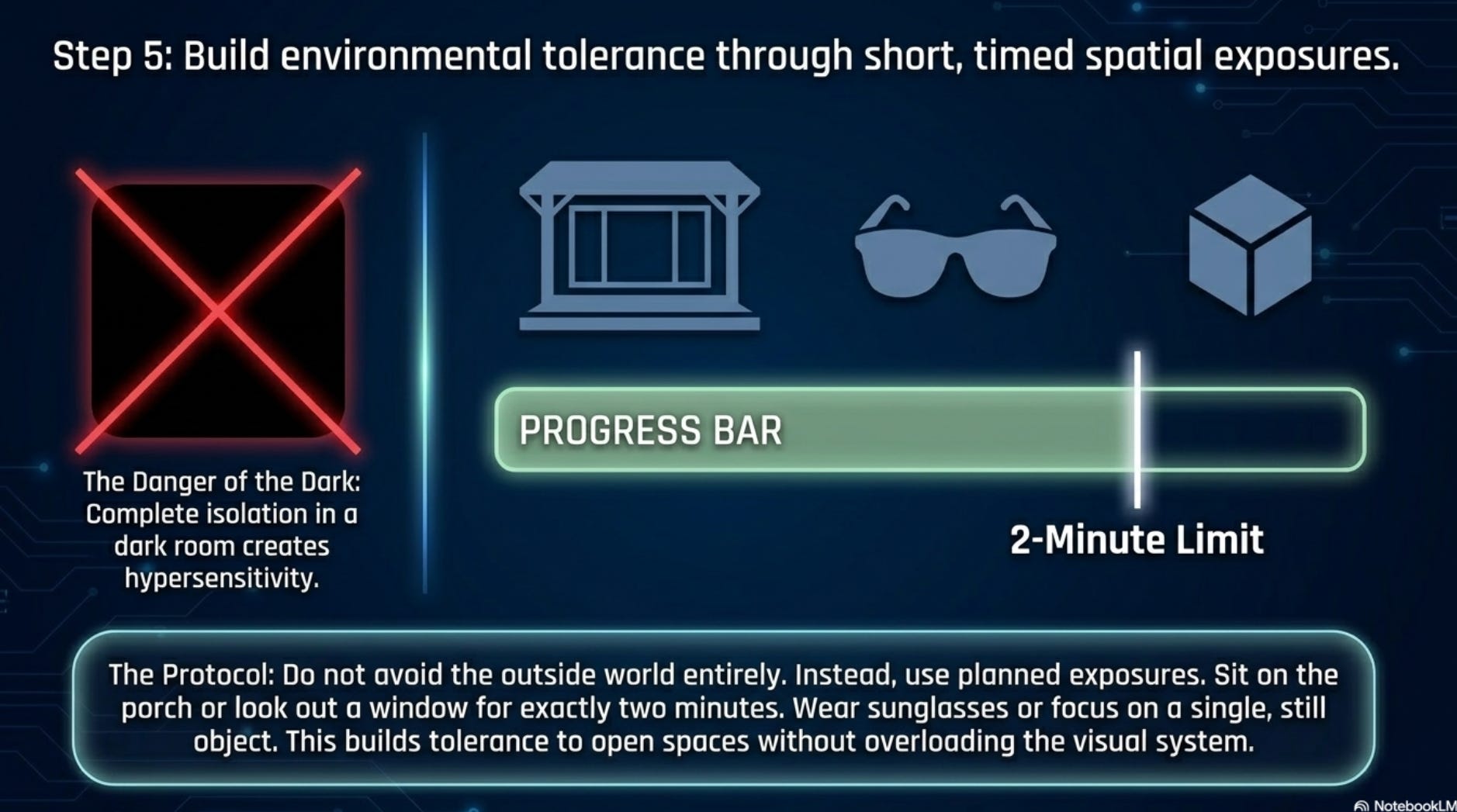
Expose Yourself to Spaces in Short, Timed Intervals
Complete isolation in a dark room may feel safe, but it can make the brain more sensitive to stimulation over time. Instead of avoiding the outside world entirely, use short, planned exposures. Sit on the porch or look out a window for just two minutes while wearing sunglasses or focusing on a single, still object. This helps your brain build up tolerance to open spaces without overloading your visual system.
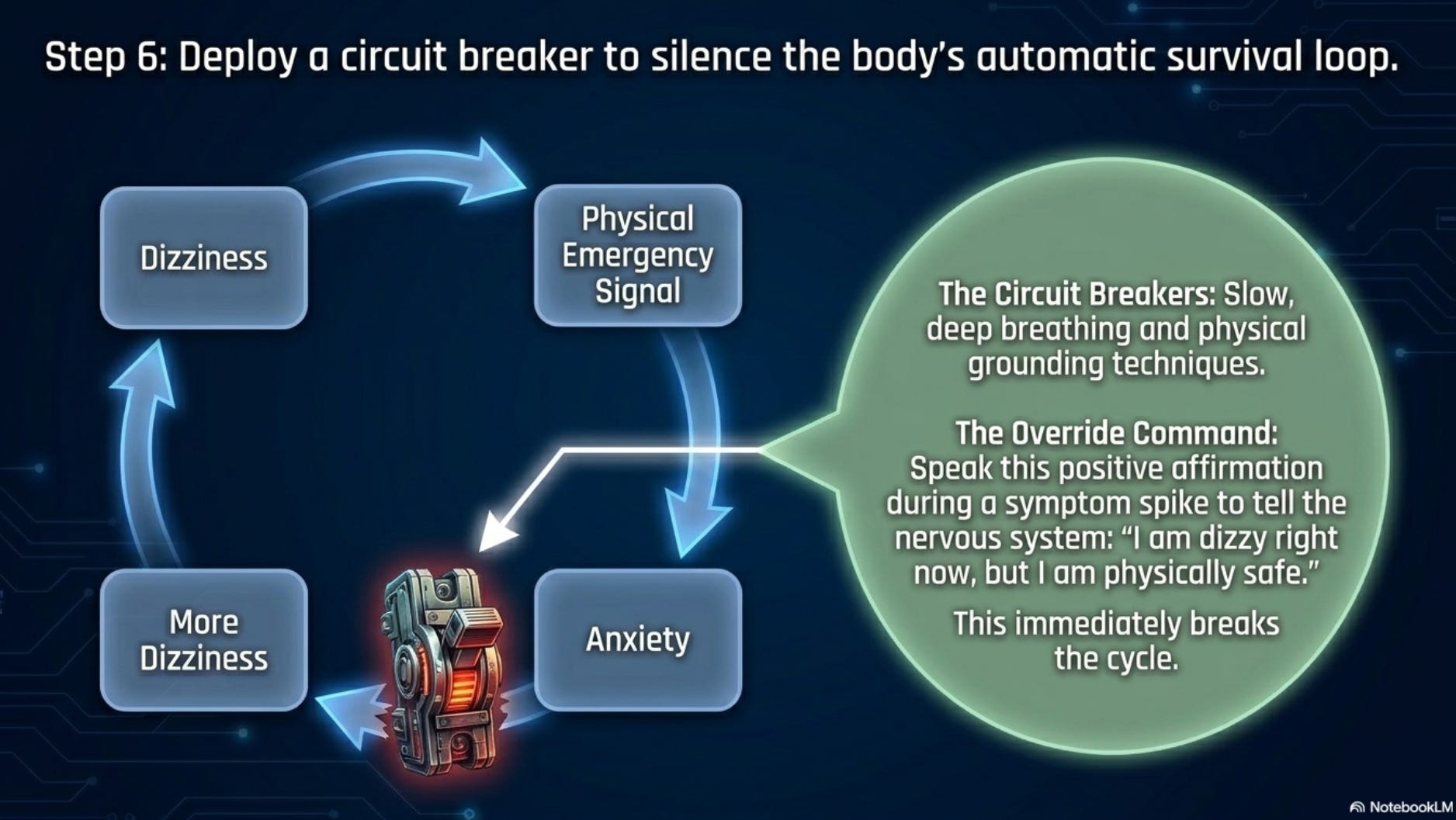
Calm Your Body’s Automatic Alarm Response
Because a hyperactive balance system mimics a real physical emergency, your body stays locked in a survival loop. You can counteract this by applying slow, deep breathing and grounding techniques. Speaking positive, calm affirmations over yourself during a symptom spike directly tells your nervous system, “I am dizzy right now, but I am physically safe.” This breaks the immediate cycle of anxiety and dizziness.
Further Guidance and Educational Resources
Navigating a hyperactive vestibular system requires excellent information and specialized support. The following resources offer dedicated education, patient advocacy, coaching networks, and recovery tools to help you better understand vestibular migraine, PPPD, and MdDS:
Educational Organizations and Advocacy Groups:
Vestibular Disorders Association (VEDA) – The premier global resource for vestibular patient education, support groups, and specialist directories.
National Institute on Deafness and Other Communication Disorders (NIDCD) – Detailed scientific breakdowns of vestibular system function and inner ear disorders.
American Migraine Foundation – Extensive clinical articles covering migraine variants, including vestibular migraine diagnostics and treatments.
Migraine Trust – A dedicated international resource offering patient support, research updates, and evidence-based guidance for living with complex migraines.
Whirled Foundation – A specialized patient advocacy network focused on providing practical coping strategies for chronic vertigo and balance conditions.
Specialized Clinics, Communities, and Podcasts:
Grounded: The Vestibular Podcast – Hosted by Dr. Madison Oak, offering regular discussions on navigating chronic dizziness, shoes for balance, and exercise pacing.
Vestibular Group Fit – An online community and movement program specifically structured for individuals with vestibular migraine and PPPD.
Balancing Act Vestibular – Professional telehealth consultation and vestibular rehabilitation resources managed by specialized vestibular physical therapists.
The Dizzy Cook – A comprehensive educational resource focusing on the vestibular migraine diet, trigger identification, and lifestyle modifications.
Mind Over Meniere’s – A dedicated blog and coaching resource focusing on the cognitive, emotional, and psychological management of chronic vestibular disorders.
Professional Research and Clinical Trial Databases:
PubMed Central – A free digital repository of biomedical and life sciences journal literature providing open access to peer-reviewed vestibular research.
ClinicalTrials.gov – The global registry of publicly and privately funded clinical studies, useful for tracking emerging treatments in vestibular science.