
Using Mindfulness to Navigate Your Dizziness


When you experience persistent dizziness or pain, it often feels like your body has become an unreliable narrator. You might find yourself constantly worrying about the next dizzy spell or feeling frustrated that your recovery isn’t moving faster. While the physical exercises we perform in the clinic are vital, adding mindfulness to your daily routine can significantly ‘facilitate’ a smoother recovery process and help you regain a sense of control.
Understanding Mindfulness in Recovery
Mindfulness is the practice of paying attention to the present moment without judgment. It involves building an awareness of your thoughts, feelings, and physical sensations. In the context of vestibular rehabilitation, this awareness helps ‘optimize’ the way your brain processes balance signals and manages discomfort.
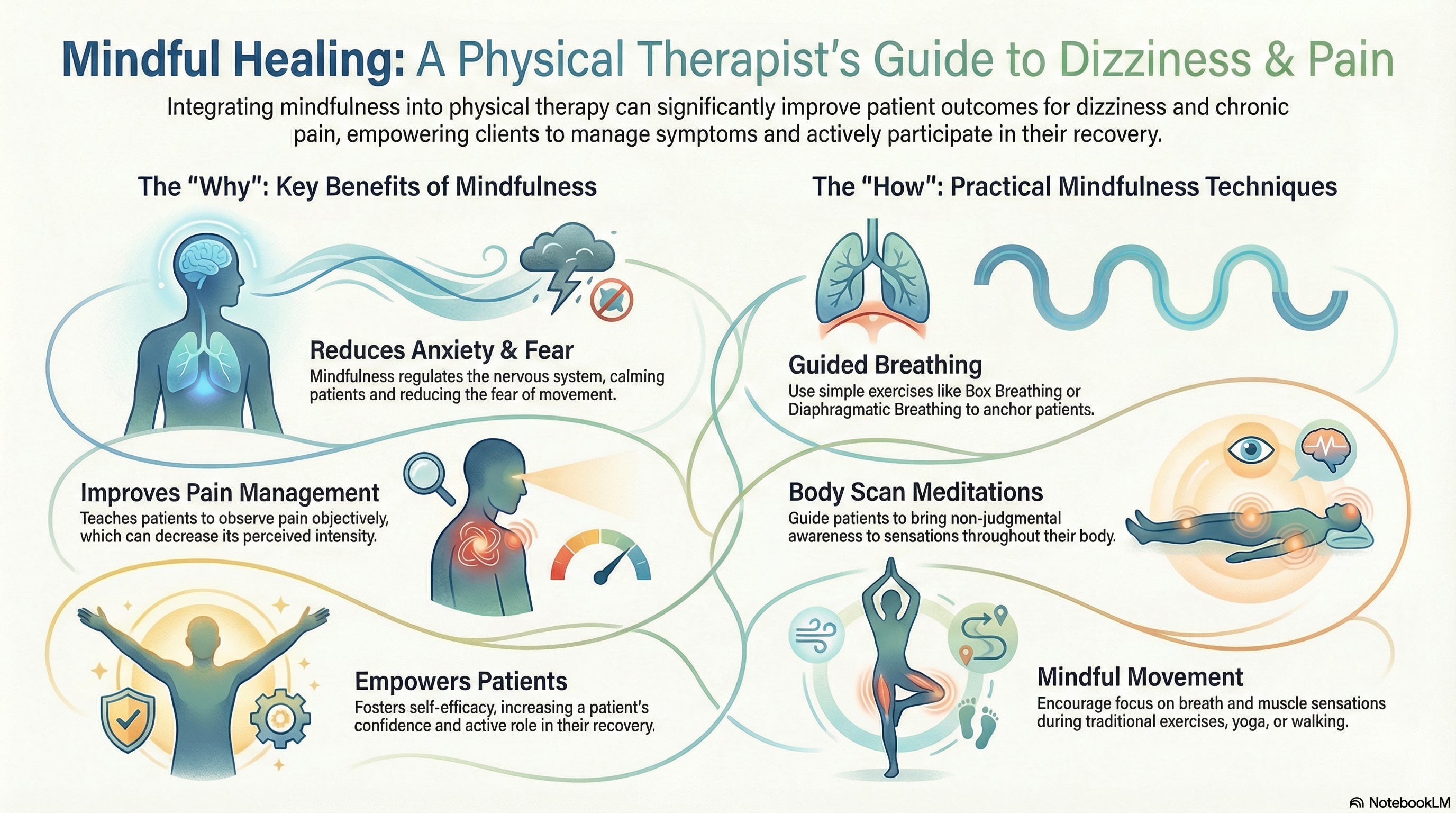
Integrating mindfulness into your therapy offers several key benefits:
Calming the Nervous System: Dizziness naturally triggers anxiety, which can create a cycle of increased symptoms. Mindfulness helps ‘coordinate’ a calmer response from your nervous system.
Building Body Awareness: By focusing on specific sensations, you improve your awareness of your body in space. This helps ‘support’ your confidence and reduces the fear of movement.
A New Perspective on Pain: Mindfulness teaches you to observe discomfort objectively. By changing how you relate to pain, you can improve your ability to cope and reduce its intensity.
Active Participation: You become an active partner in your healing. Being attuned to your body leads to better outcomes and helps you carry your progress into your daily life.
Practical Tools for Your Daily Life
You can practice these simple techniques during your therapy sessions or at home to help ‘maintain’ the integrity of your progress.
Guided Breathing
Your breath serves as a constant anchor. Using it correctly helps ‘support’ a stable internal environment.
The 4-7-8 Technique. This is a powerful tool to ‘optimize’ your body’s relaxation response. If you feel a surge of dizziness or anxiety, follow these steps:
Exhale completely through your mouth, making a whoosh sound.
Inhale quietly through your nose to a count of 4.
Hold your breath for a count of 7.
Exhale forcefully through your mouth, making a whoosh sound to a count of 8.
Diaphragmatic Breathing: Place one hand on your belly. ‘Breathe slowly, feeling your belly expand like a balloon. Now breathe out slowly, feeling your belly fall back down.’
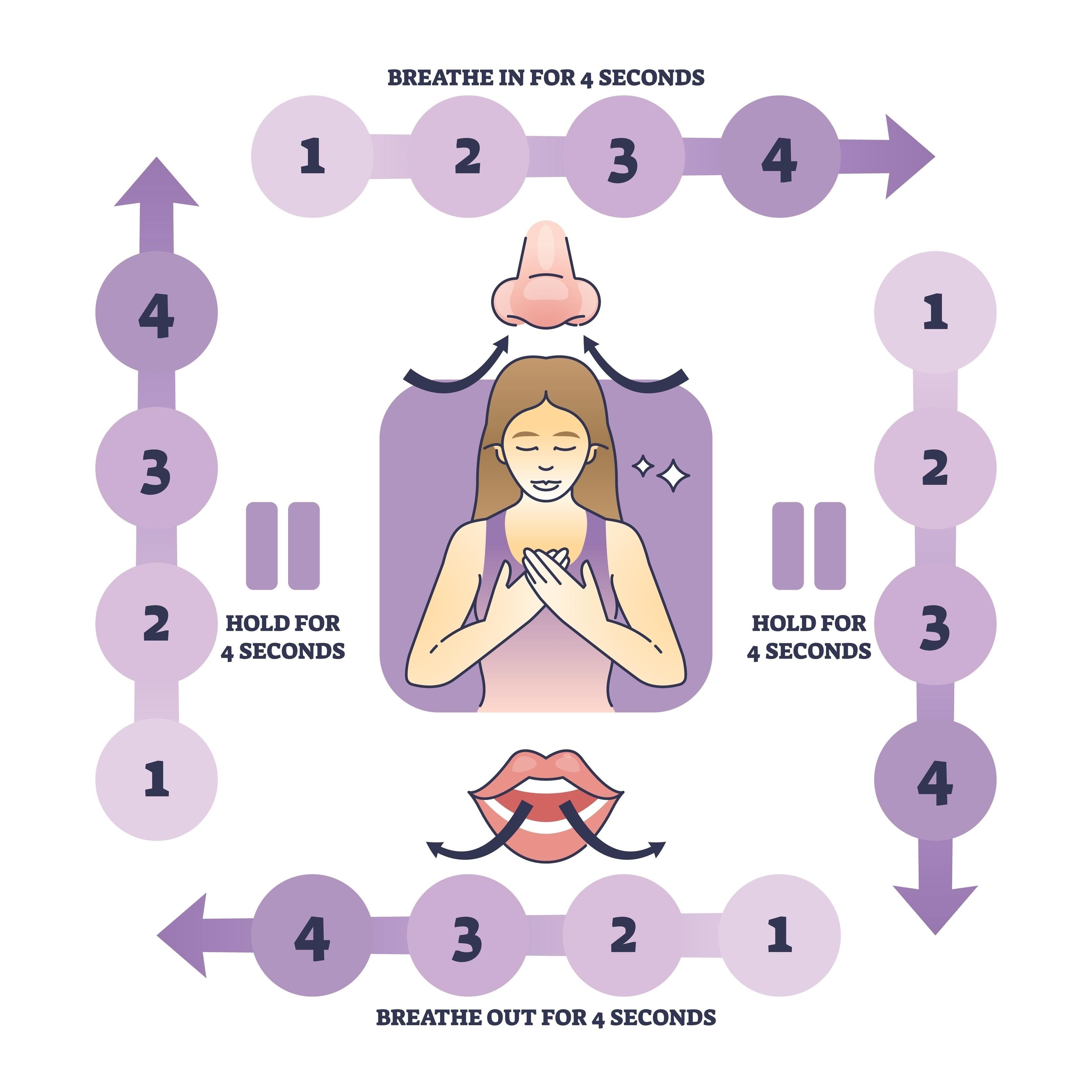
Box Breathing: Use this to reset when feeling overwhelmed or overstimulated.
Inhale for 4 seconds.
Hold for 4 seconds.
Exhale for 4 seconds.
Hold for 4 seconds.
The Body Scan
A body scan helps you check in with your physical state without feeling the need to ‘fix’ anything immediately.
Progressive Relaxation: Start at your toes and work your way up. ‘Notice the sensations. Are they warm or cold? Relaxed or tense?’
Focused Awareness: If you have a specific area of pain, observe it without judgment. ‘Notice the sensations in your lower back. Is the pain sharp or dull? Observe these sensations without trying to change them.’
Mindful Movement
Whether you are walking or performing your vestibular exercises, stay present in the action.
Walking Meditation: ‘Feel the ground beneath your feet with each step. Notice the sensations in your legs as you move. Breathe in and out with each step.’
Exercise Anchoring: During challenging balance tasks, use your breath to stay grounded. ‘As you turn your head, notice the sensations in your body. Feel the ground beneath your feet. Keep your attention on the present moment.’
Moving Forward with Self-Compassion
Recovery is rarely a straight line. There will be days when the dizziness feels louder, or the pain feels heavier. During these times, it is essential to ‘facilitate’ a kind inner dialogue.
‘It is okay to feel frustrated at times. Be patient with yourself and acknowledge the progress you have made.’
Mindfulness does not replace your physical therapy; it enhances the ‘signaling’ between your brain and your body. By practicing being present, you provide the best possible ‘microenvironment’ for your recovery to thrive.