
Unlocking Athletic Potential: The Power of ‘Sensory Performance’ and the FYZICAL Balance Paradigm

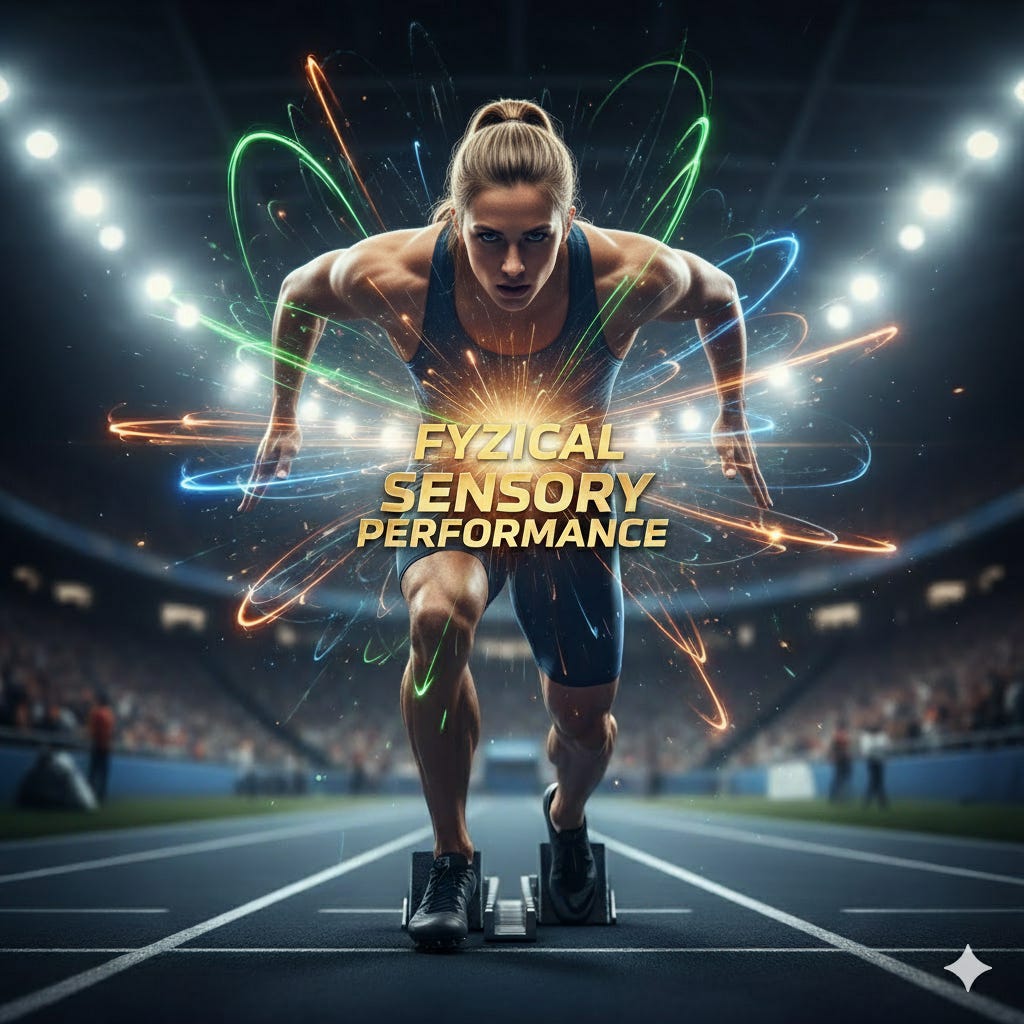
What if the key to unlocking peak athletic performance and minimizing injury wasn’t just about physical prowess, but about how athletes perceive and process the world around them? I am Brian Werner, PT, MPT, the National Director of Vestibular Education & Training at FYZICAL Therapy & Balance Centers.
At FYZICAL, we explore this crucial connection, leading us to a new understanding we call ‘Sensory Performance’ – the athlete’s innate and developed ability to effectively perceive, interpret, and respond to a wide range of sensory inputs to optimize movement and safety. This article introduces this vital concept and explores its crucial role in athletic success and injury prevention, all within the framework of the FYZICAL Balance Paradigm.
Sensory Performance: The Athlete’s Hidden Advantage
Every athletic movement requires the brain to process massive amounts of data from the senses: vision, somatosensation (touch/body awareness), and the vestibular system (balance and spatial orientation). When these senses work in harmony, the athlete achieves high ‘Sensory Performance’—allowing for fluid movement, quick reactions, and resilience against injury.
However, problems arise when the athlete develops a sensory mismatch. This occurs when they learn to rely too long or too heavily on one or more sensory systems over others, such as over-relying on vision or on surface cues from the feet. This over-reliance, which is often driven by an underlying issue like a vestibular hypofunction (reduced inner ear function), causes two critical failures:
Increased Injury Risk: The athlete cannot adapt quickly to unexpected shifts or uneven surfaces, increasing their vulnerability to sprains, falls, and collisions.
Decreased Athletic Performance: Inefficient movement patterns and slow, inaccurate reactions prevent the athlete from achieving their peak speed, agility, and precision.
These poor patterns become automatic through Hebbian learning (‘neurons that fire together, wire together’), reinforcing the bad habit and diminishing the athlete’s overall ‘Sensory Performance.’
Cultivating ‘Sensory Performance’: The FYZICAL Balance Paradigm
The exciting prospect is that ‘Sensory Performance’ can be developed, and maladaptive patterns can be successfully retrained through targeted physical therapy. Our physical therapists at FYZICAL are uniquely positioned to guide this process using the FYZICAL Balance Paradigm.
We identify the root causes of sensory dysfunction through a multi-faceted assessment that includes:
The FYZICAL-CTSIB (Clinical Test of Sensory Interaction on Balance) to pinpoint which senses the athlete is over-relying on.
Specialized Infrared Goggle-Based Assessments, including Ocular Motor Assessments, to evaluate inner ear and eye movement function.
Central Provocative Motor and Dynamic Visual Acuity (DVA) Testing to measure the brain’s ability to process visual input during head and body movement.
Comprehensive Strength and Endurance testing to assess the physical foundation supporting optimal balance.
By analyzing these objective data points, we gain a detailed understanding of an athlete’s current level of ‘Sensory Performance.’ Our evidence-based interventions then focus on:
Retraining Sensory Integration: We employ exercises that challenge and enhance collaboration among the three primary systems.
Promoting Positive Neuroplasticity: We design exercises to break down maladaptive neural pathways and build more efficient, balanced sensory strategies.
Using Advanced Technology: We use tools like our Safety Overhead Support (SOS) system to safely challenge balance in a controlled environment, refining the athlete’s Sensory Performance in dynamic situations.
This holistic approach considers the unique sensory profiles of athletes across all ages and abilities, transforming how they perceive and interact with their environment.
Conclusion
‘Sensory Performance’ is the often-untapped frontier of athletic success. Recognizing that sensory mismatches and maladaptive learning not only increase the risk of injury but also reduce athletic performance is crucial for unlocking an athlete’s full potential.
At FYZICAL Therapy & Balance Centers, we are committed to empowering athletes with the sensory tools they need to move with greater efficiency, confidence, and safety by enhancing their ‘Sensory Performance.’ We help athletes of all levels gain a critical competitive edge and build a foundation for long-term athletic success rooted in ‘Sensory Performance.’
About the Author:
Brian Werner, PT, MPT, is a physical therapist who has been specializing in vestibular and balance disorders for over a quarter of a century. He is the founder of the FYZICAL Balance Paradigm and one of the co-founders of FYZICAL, LLC, Balance Center Division with Dr. Daniel Deems, MD, PhD, where he serves as the National Director of Vestibular Education & Training. His deep, practical understanding of high-level balance and sensory demands stems from his background as a hockey player, a traditional rock climber, and a gymnast—activities that require peak ‘Sensory Performance.’
The athletes love to get in the Bertec- like anything else for them, it is a competition. But it gives me great info to take them from good to great on the field/court/arena. I use that phrase often with my athletes “ good to great”. Balance is the key difference that takes them to the next level.