


If you are experiencing dizziness, vertigo, or unsteadiness, you are not alone. These sensations can be frustrating and frightening, but in most cases, they are caused by a specific, treatable problem.
At FYZICAL, we do not use a ‘one-size-fits-all’ approach to balance. We use an advanced, evidence-based system called the FYZICAL Balance Paradigm (FBP) to find the exact root cause of your symptoms and create a customized treatment plan to fix it.
This guide will help you understand this process and your path to recovery.

Why Am I Dizzy? The ‘Three-Legged Stool’
Think of your balance system as a three-legged stool. Your brain needs accurate, matching information from all three ‘legs’ to keep you stable:
Vision: What you see.
Somatosensory: What you feel (sensations from your feet, ankles, and joints).
Vestibular: What your inner ear senses (your body’s internal “level” for gravity and motion).
When one leg is damaged or ‘short’—like a weakness in your inner ear (vestibular system)—your brain must compensate. It starts to overuse or over-rely on the other two legs (vision and sensation). This sensory ‘mismatch’ is what causes dizziness, unsteadiness, or vertigo.
Our Approach: Diagnosing, Not Guessing
Your symptoms provide clues, but we use advanced technology to get a precise diagnosis.
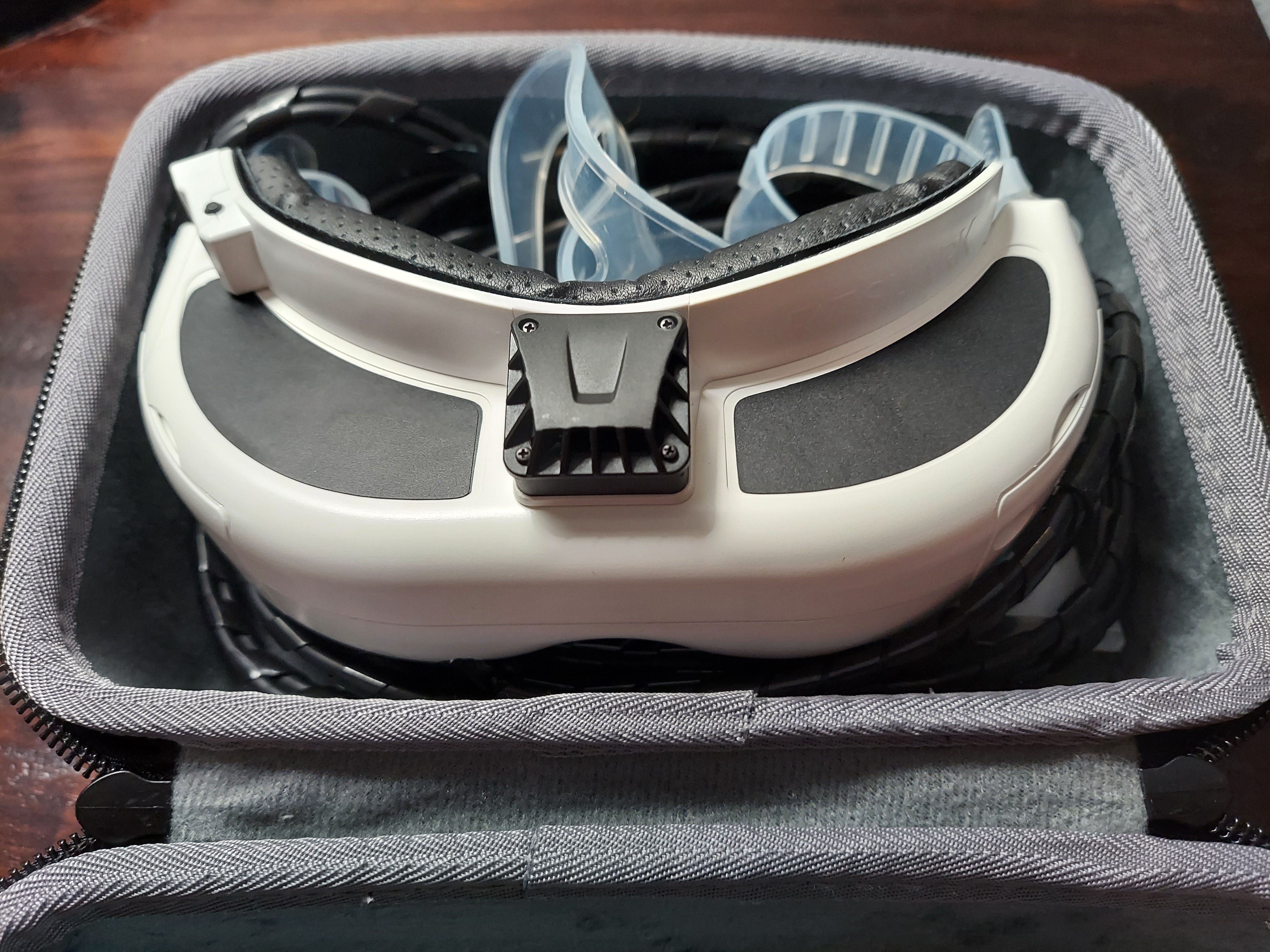
Infrared Goggles: Your inner ear and eyes are directly connected. We use specialized infrared goggles to see your eye movements (called ‘nystagmus’) in total darkness. This gives us a clear, objective ‘window’ into your vestibular system to see exactly how it is—or is not—working.
Advanced Balance Testing (FYZICAL-CTSIB): We put you through a series of six specific tests on both firm and soft surfaces, sometimes with your eyes closed or with head movement. This test scientifically measures which of the ‘three legs’ your brain is using, which ones it is over-relying on, and which ones it is ignoring.
The FYZICAL Balance Paradigm (FBP): Finding Your Specific Mismatch
The FBP is a ‘roadmap’ that classifies a patient’s specific balance strategy. Our tests allow us to pinpoint exactly where you fall on this map, moving you from a vague ‘dizziness’ diagnosis to a specific, treatable condition.
Here are the most common diagnoses within the FBP:
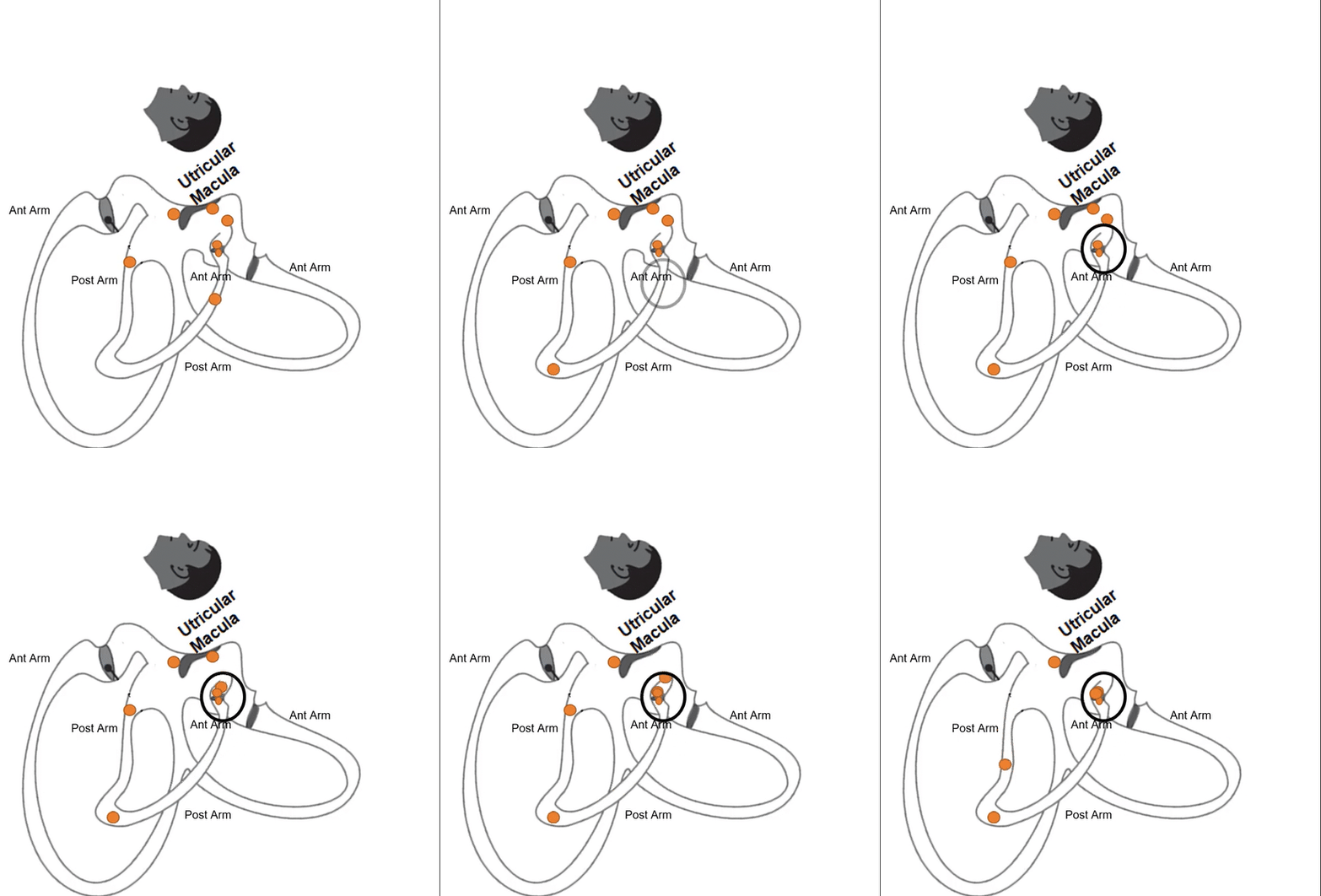
BPPV (Benign Paroxysmal Positional Vertigo): This is a mechanical problem where tiny crystals in your inner ear have fallen into the wrong canal.
What you feel: A ‘room-spinning’ vertigo that is intense but brief (under 60 seconds), triggered by specific movements like rolling over in bed, bending down, or tilting your head back (ex., getting your hair done, dentist chair).
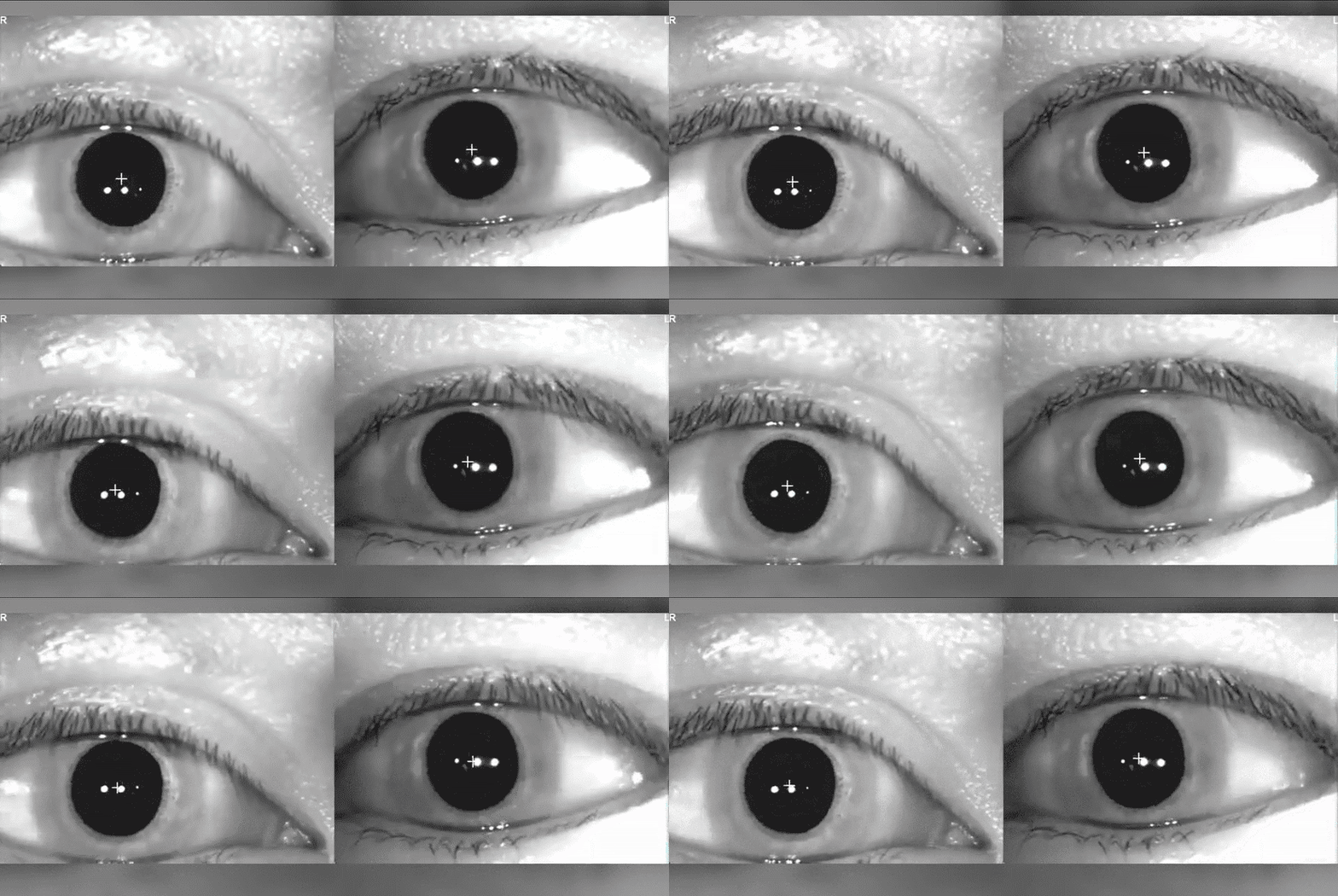
Downbeat-Torsional Nystagmus Supporting a Vestibular Dysfunction - Only Seen under Infrared Goggles The Fix: We perform specific tests (such as the Dix-Hallpike or Supine Head Roll under infrared video Goggles) to detect the crystals. We then use a specific repositioning maneuver (such as the Epley, Semont, or Zuma Maneuver) to move them back, often resolving the vertigo in 1-2 visits.
VVM (Visual-Vestibular Mismatch): This is a Visual Dependency. Your brain has learned to mistrust its faulty inner ear and now over-relies on your vision.
What you feel: Dizziness in busy environments (grocery stores, crowds), discomfort with fast motion (scrolling on a phone, action movies), or a feeling of “floating.”
SVM (Somatosensory-Vestibular Mismatch): This is a Surface Dependency. Your brain over-relies on information from your feet and the ground.
What you feel: You feel stable on hard, flat floors, but become very unsteady on uneven ground, thick carpet, sand, or in the dark.
Vestibular Hypofunction (VH-VIS or VH-SOM): This indicates a primary weakness in your inner ear. Your brain copes by developing either a visual dependency (VH-VIS) or a surface dependency (VH-SOM).
Complex / Profound Mismatches (SVVM or VSVM): For patients with more profound vestibular loss, the brain may over-rely on both remaining senses.
SVVM (Somatosensory>Visual-Vestibular Mismatch): You rely heavily on ‘feel’ more than vision.
VSVM (Visual>Somatosensory-Vestibular Mismatch): You rely heavily on both vision and ‘feel.’ These complex conditions are why generic balance exercises fail. They require a highly specific retraining program.
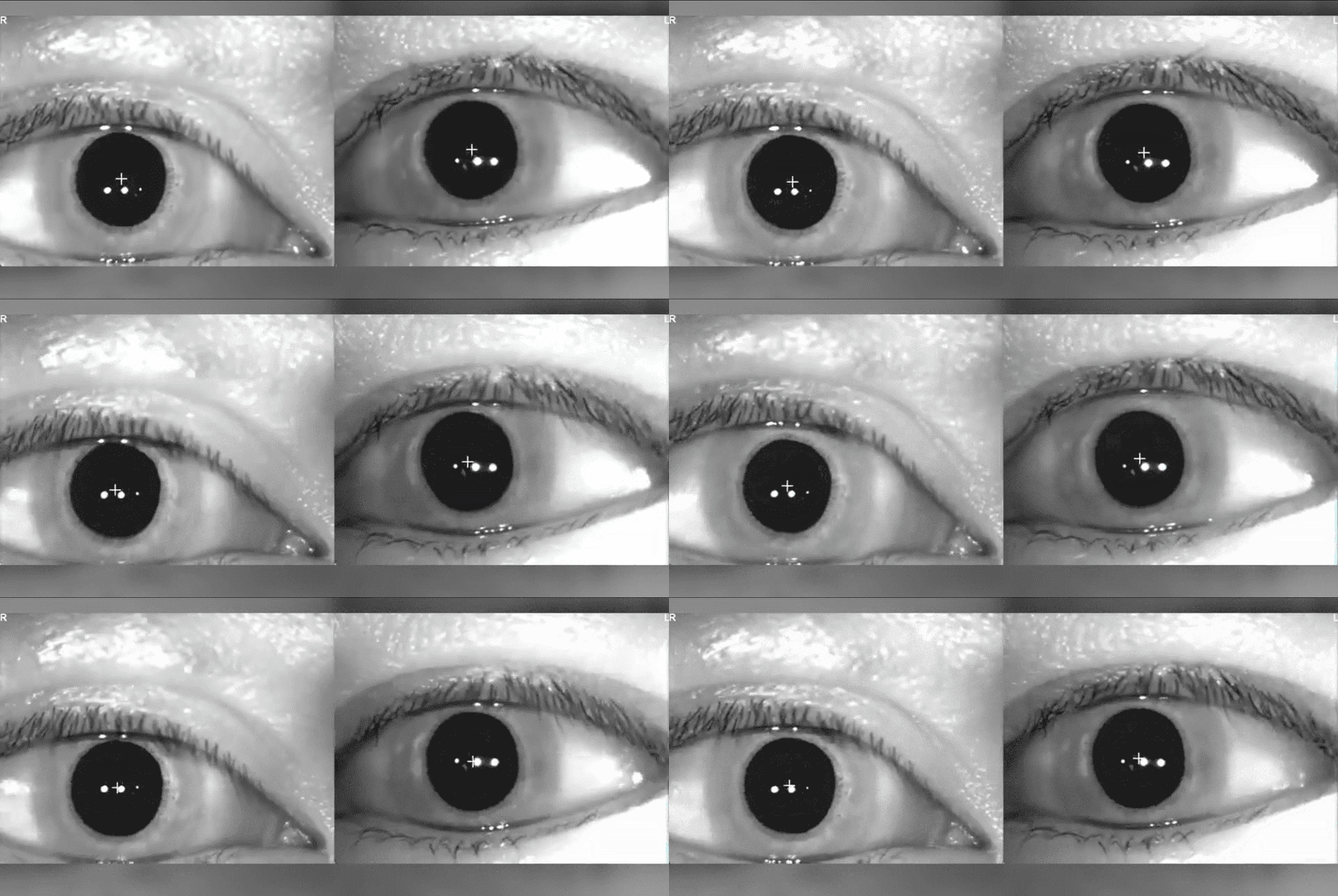
Your Treatment: Retraining Your Brain in a Safe Environment
Our treatment is targeted to your exact diagnosis.
If you have BPPV, we perform a repositioning maneuver.
If you have a mismatch (like VVM or SVM), our job is to ‘retrain’ your brain. We use specific exercises to decrease your reliance on the “overused” senses and force your brain to trust and use its vestibular system again. This is called neuroplasticity.
Safety is Our First Priority. We know the biggest barrier to getting better is the fear of falling. That is why we use the Safety Overhead Support (SOS) System.
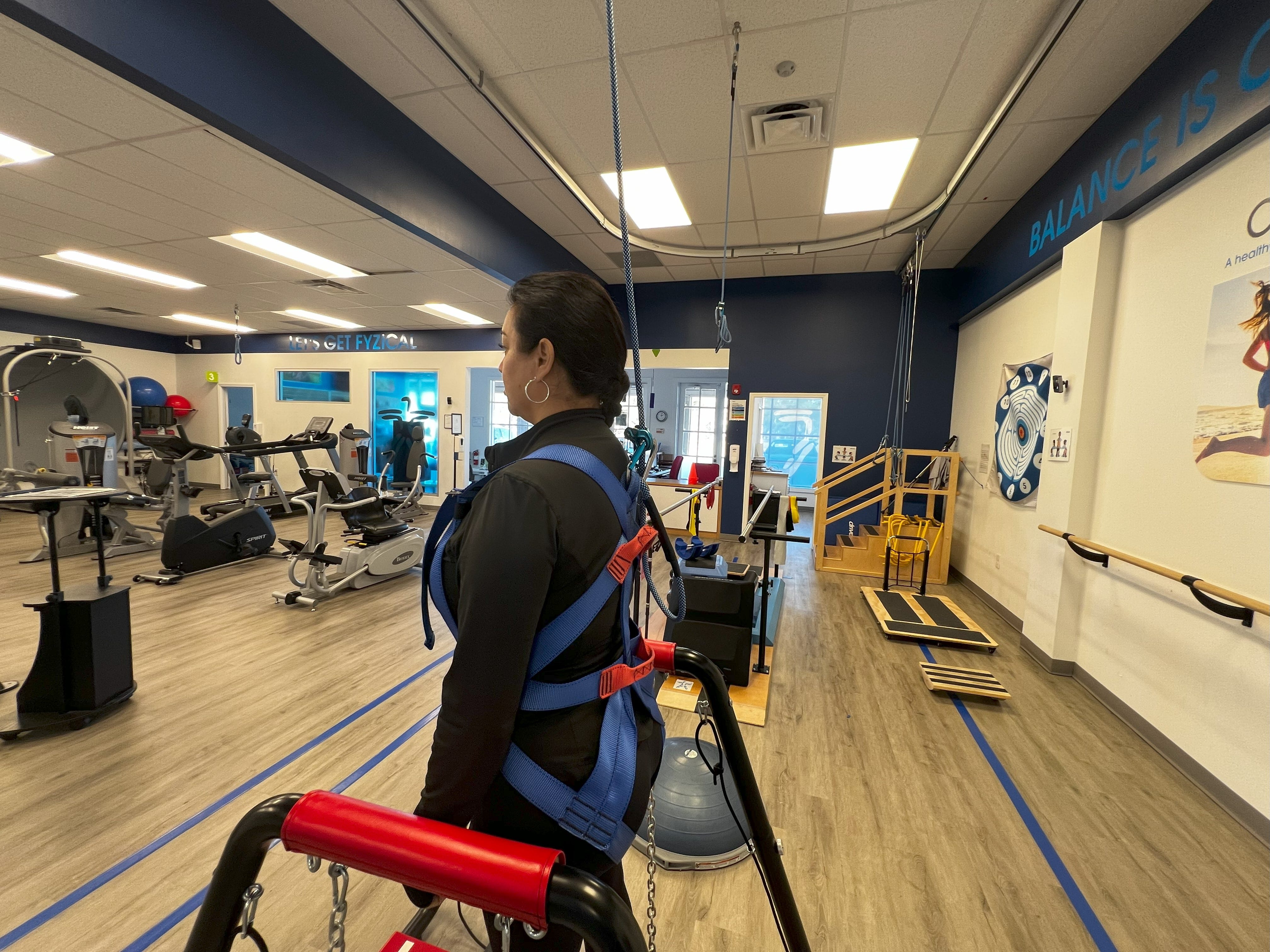
You will be secured in a comfortable, ceiling-mounted harness that prevents you from falling. This safety removes your fear, allowing your therapist to challenge you at a level that truly ‘rewires’ your brain and builds new confidence.
Your path to stability starts with a specific diagnosis. We are here to help you find it.