
The Pilot’s Nightmare: Why Your Brain Gets Stuck Feeling Like It’s Still Moving in MdDS


Have you ever spent a long day on a boat, a plane, or a train, and when you finally stepped back onto solid ground, you felt like you were still rocking, rolling, or moving?
For most people, that weird feeling goes away after a few minutes or hours. But for some, the feeling never stops. This constant, exhausting rocking sensation is a condition called Mal de Débarquement Syndrome (MdDS).
To understand why this happens—and why a very similar problem causes some seniors to get completely stuck using a walker—we have to look at a fascinating aviation puzzle called ‘the leans.’

Flying Blind: The Pilot’s Challenge
When a pilot flies a plane directly into a thick cloud, they lose sight of the ground. Without the horizon to look at, their biology fails them almost instantly. The fluid in their inner ears settles, and their brain begins to create a powerful lie. The brain convinces the pilot that the plane is flying straight and level when, in reality, it is trapped in a dangerous, banking spiral toward the ground.
To survive, a pilot must undergo intense training to completely ignore what their body is telling them. They have to ignore their ‘gut feeling’ and trust the mechanical instruments on the dashboard instead.
If they trust their body instead of their dashboard, they crash.
As balance specialists, we treat patients facing a very similar, frustrating problem:
What happens when your brain’s internal dashboard is the very thing that is broken, but your brain refuses to stop trusting it?
How the Brain’s ‘Balance Computer’ Gets Stuck
To keep you steady on your feet, your brain constantly coordinates three separate systems:
Your Eyes: What you see around you.
Your Feet and Joints: What your body feels when touching the surface beneath you.
Your Inner Ear (Vestibular System): Your internal dashboard that senses motion and gravity.
When you spend days on a cruise ship or a long flight, your inner ear feels constant, rhythmic motion, but your eyes say you are just sitting still in a cabin. To keep you from getting sick, your brain’s computer adapts. It updates its software and decides that this constant rocking motion is your ‘new normal.’
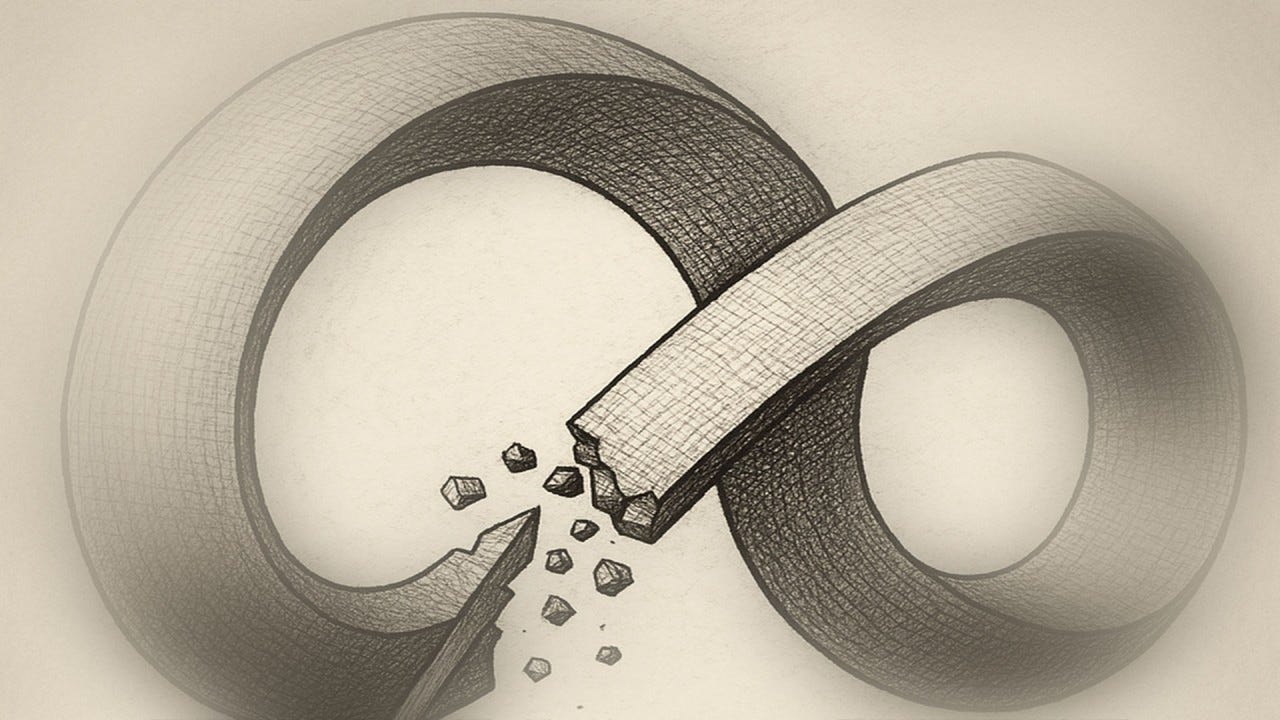
When you step back onto solid land, a healthy brain instantly deletes that temporary software update. But in an entrained, or ‘stuck’ system, the update gets trapped.
Your feet are on solid ground. Your eyes see a perfectly still room. But your internal balance dashboard is stuck in a loop, screaming, ‘We are still rolling on a wave!’ Because your brain is hardwired to prioritize your inner ear for survival, it believes the broken instrument instead of your eyes and feet. It then forces your body to constantly sway and rock to compensate for a ‘ghost’ wave that isn’t actually there.

The Walker Trap: A Different Kind of Stuck Software
We see the exact same tracking error in patients who become completely dependent on a front-wheeled walker, even years after their legs have healed.
Imagine someone who had a bad fall or an inner ear issue years ago. Their internal balance dashboard started giving erratic, terrifying readings.
The brain lost faith in its ability to stay upright and panicked.
To feel safe, the patient grabbed a walker. By gripping those rubber handles tightly, they bypassed their internal balance dashboard entirely. They created a shortcut, using their hands and arms to tell them where the ground is.
┌─────────────────────────────────────────────────────────┐
│ HOW THE BRAIN CHEATS FOR BALANCE │
├────────────────────────────┬────────────────────────────┤
│ THE MDDS PATIENT │ THE WALKER PATIENT │
│ Trusts a 'ghost wave' │ Trusts their hands │
│ stuck in the vestbular. │ instead of their feet. │
├────────────────────────────┴────────────────────────────┤
│ RESULT: The brain automates a bad habit and forgets │
│ how to use its natural, built-in balance systems. │
└─────────────────────────────────────────────────────────┘
Over months and years, this becomes an automatic habit. The brain learns to completely ignore the natural balance signals from the feet and inner ears because it relies so heavily on the hands.
If you try to pull the walker away, you aren’t just removing a metal frame; you are temporarily turning off the patient’s navigation system.
The brain panics, adrenaline spikes, muscles stiffen, and they feel like they are falling before they even take a step.
How We Break the Loop
If you have been rocking since a vacation, or if you feel completely chained to your walker, traditional leg exercises or generic balance drills usually won’t solve the problem. That is because your muscles aren’t the issue—your brain’s software is.
To fix a stuck balance loop, specialized physical therapy has to trick the brain into a factory reset. We do this through a process called sensory re-weighting:
Turning Off the Cheat Codes: We have to safely take away the crutches your brain is using to cheat. For a walker-dependent patient, this means a gradual, careful, step-by-step process to reduce hand contact—moving from a tight grip to a flat palm to a two-finger touch, and eventually to lightly trailing a hand along a wall. This starves the bad habit and forces the brain to look down at the feet again.
Forcing a Reboot: The brain will only rewrite its balance software when it realizes its current strategy no longer works. By using specialized foam surfaces that challenge your footing, or using moving visual patterns that challenge your eyes, we force the brain to stop listening to the broken error messages and finally recalibrate its natural internal dashboard.
Retraining a brain that has been stuck in a bad balance habit for months or years takes patience, guidance, and lots of precise practice. But once you realize that your body isn’t broken—your internal navigation computer just needs a reboot—you can finally start training your brain to trust solid ground again.