

Why does the ground feel like it is rolling, pitching, or swaying months or even years after you step off a cruise ship, boat, or flight? For individuals living with Mal de Débarquement Syndrome (MdDS), this persistent sensation of motion creates a disruptive, invisible battle.
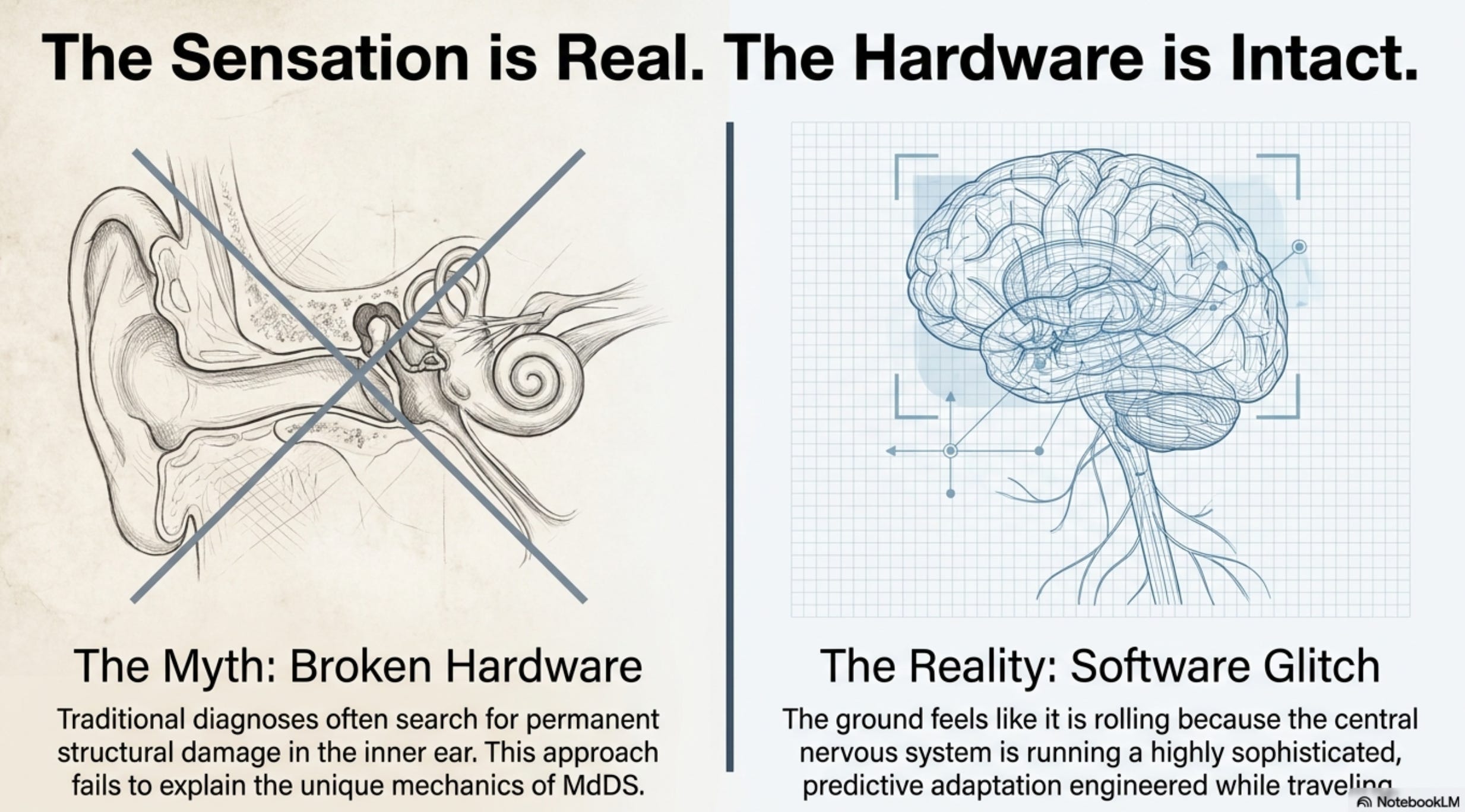
The explanation does not lie in a permanent injury to your inner ear, but rather in a highly sophisticated, predictive adaptation that your brain engineered while you were traveling.
Recently, a patient asked a profound question that perfectly captures the neurological reality of this condition:
“Is it possible my brain is linked to the direction and frequency of the ship’s engine as my adaptive software patch?”
The answer is a definitive… Yes.
This insight cuts right to the core of how the central nervous system processes movement, and it explains exactly why your body feels stuck at sea.
What Happens to Your Nervous System on a Vessel?
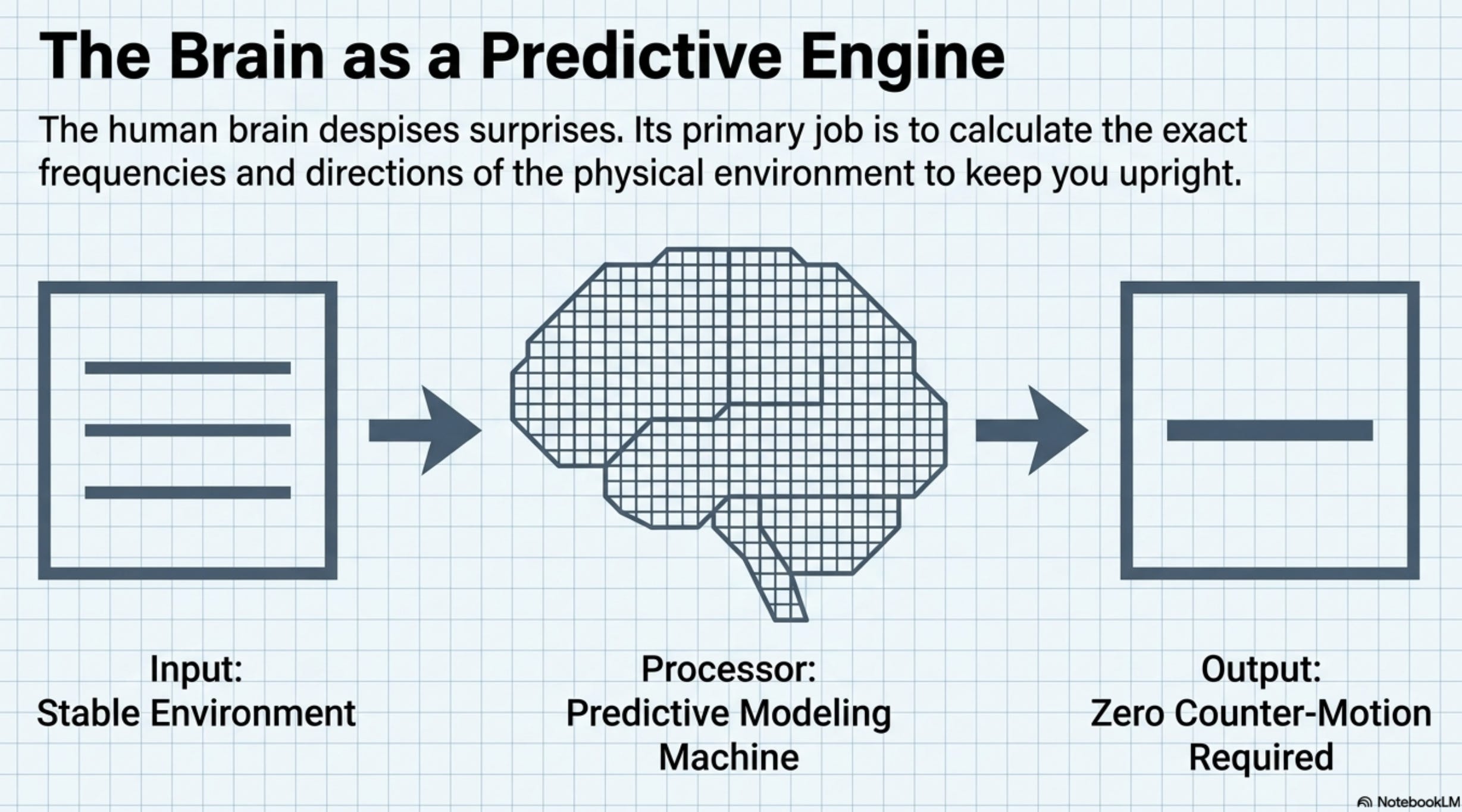
The human brain acts as an advanced predictive modeling machine. It despises surprises.
When you spend days on a vessel (boat, plane, train, other), your central nervous system encounters a continuous, patterned, rhythmic environment. You face the low-frequency rolling of the waves, but you also experience the steady, continuous mechanical vibration and directional thrust of the ship’s engine.
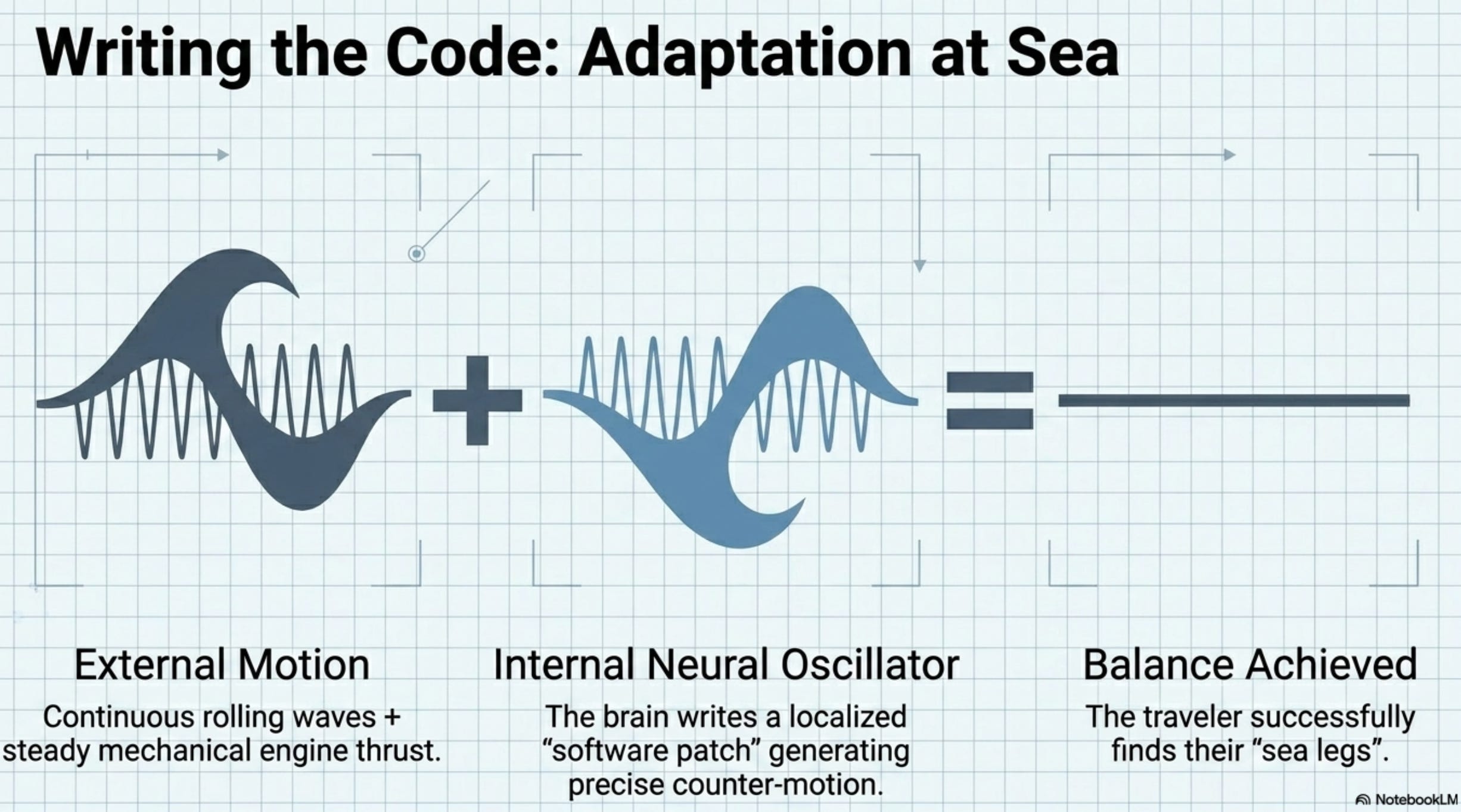
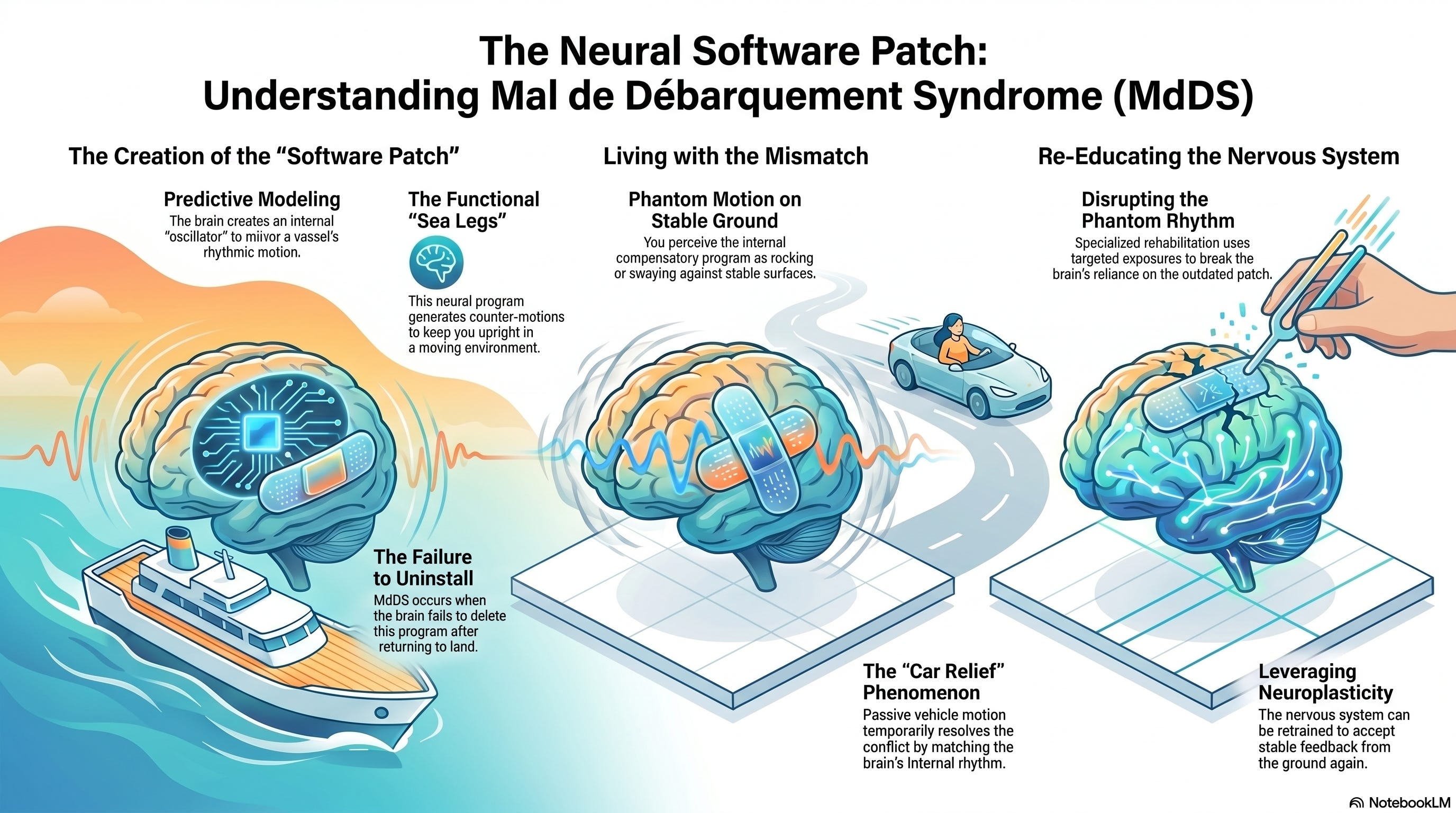
To keep you upright and prevent constant motion sickness, your brain must predict the vessel's motion. It calculates the exact frequency, timing, and direction of the physical environment. To survive this comfortably, the brain writes a localized ‘software patch’—an internal neural oscillator—that mirrors the vessel’s movement perfectly. This internal program generates a counter-motion to counteract the boat's motion, helping you find your ‘sea legs’.
The Maladaptive Strategy: Why the Patch Remains Active
For most travelers, this predictive software patch deletes itself automatically within hours of returning to stable land. However, in individuals who develop MdDS, a distinct sensory mismatch occurs.
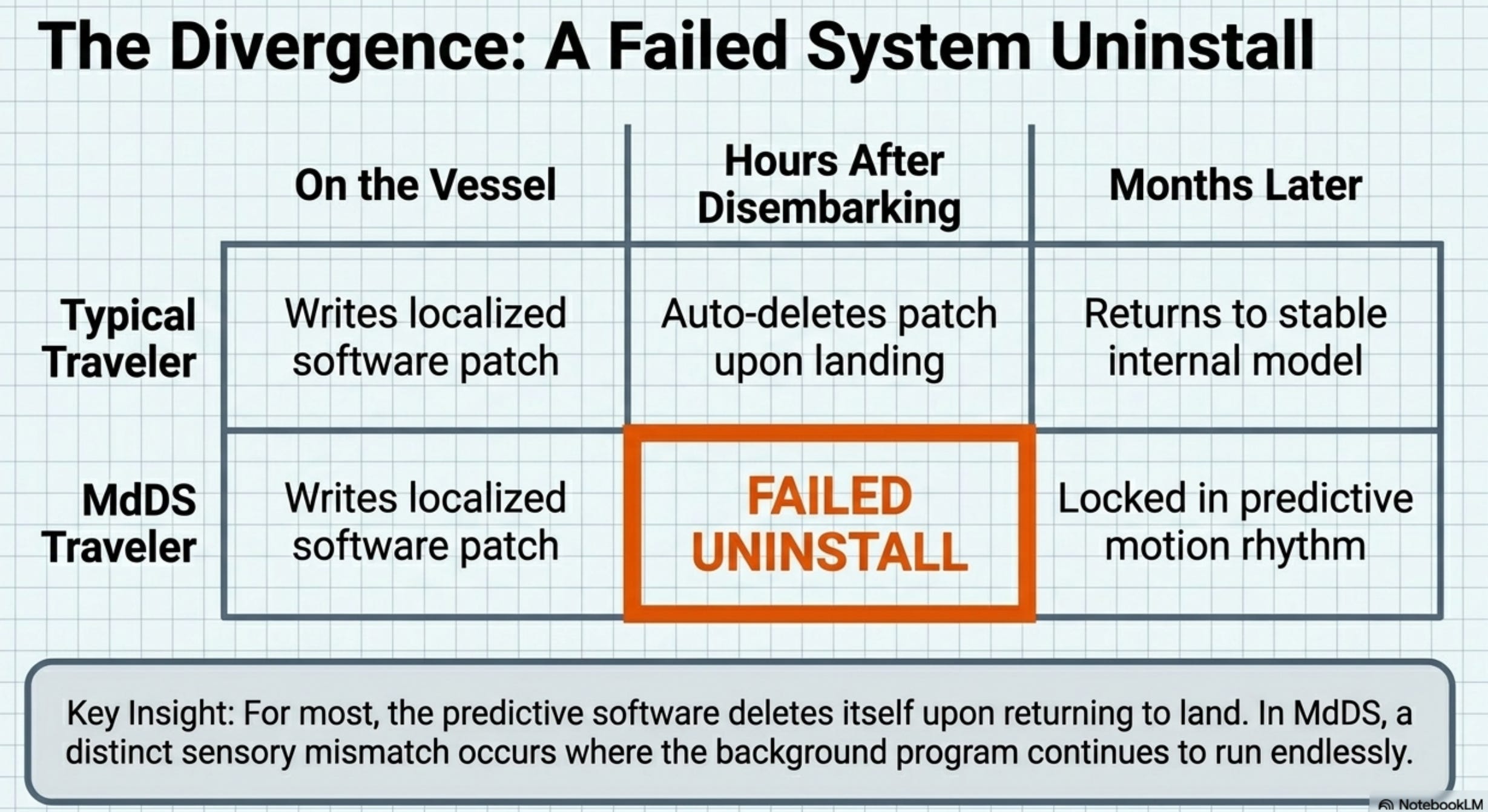
The brain fails to uninstall the program.
When you step back onto solid ground, your physical environment changes instantly, but your central nervous system continues to run the background program designed for the ship.
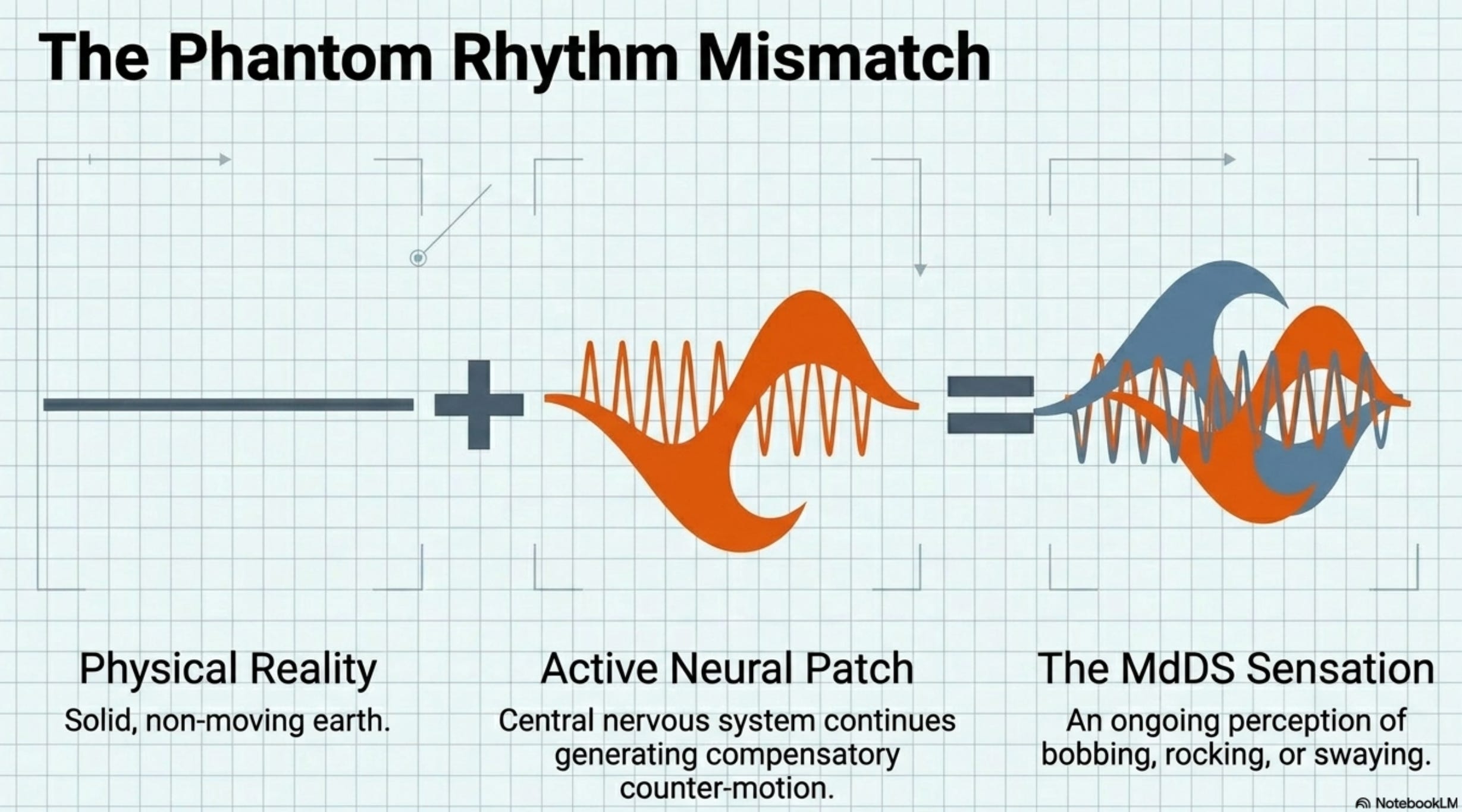
The brain expects the steady vibration of the engine and the rhythmic pitch of the hull, so it keeps generating that internal, compensatory counter-motion. Because the land is actually stable, you perceive this internal program as an ongoing sensation of bobbing, rocking, or swaying.
This represents a maladaptive sensory strategy.
Rather than shifting its reliance back to the stable ground beneath your feet, the brain remains locked into the predictive rhythm it memorized on the vessel. It continues to use an outdated internal model rather than updating it to reflect the present reality.
This also explains a classic hallmark of MdDS:
Why do many individuals feel temporary relief when riding in a car?
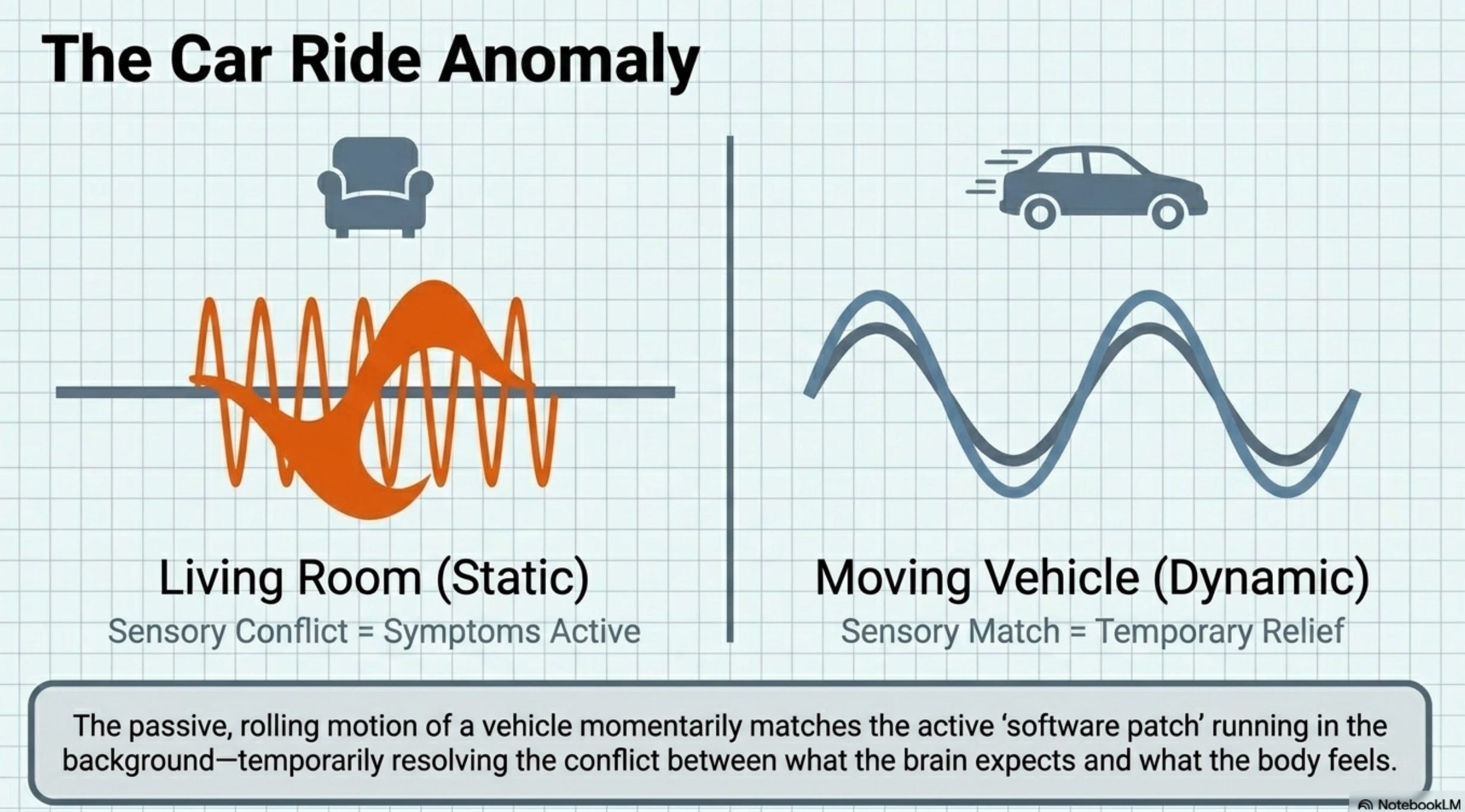
The passive, rolling motion of the vehicle matches the active ‘software patch’ running in the background, momentarily resolving the conflict between what the brain expects and what the body feels.
How Directed Training Re-Educates the Nervous System
Understanding that your symptoms stem from an undeleted predictive program completely changes the approach to recovery. The brain possesses incredible neuroplastic adaptability. Just as it learned the vessel's rhythm, it can learn to re-engage with stable reality.
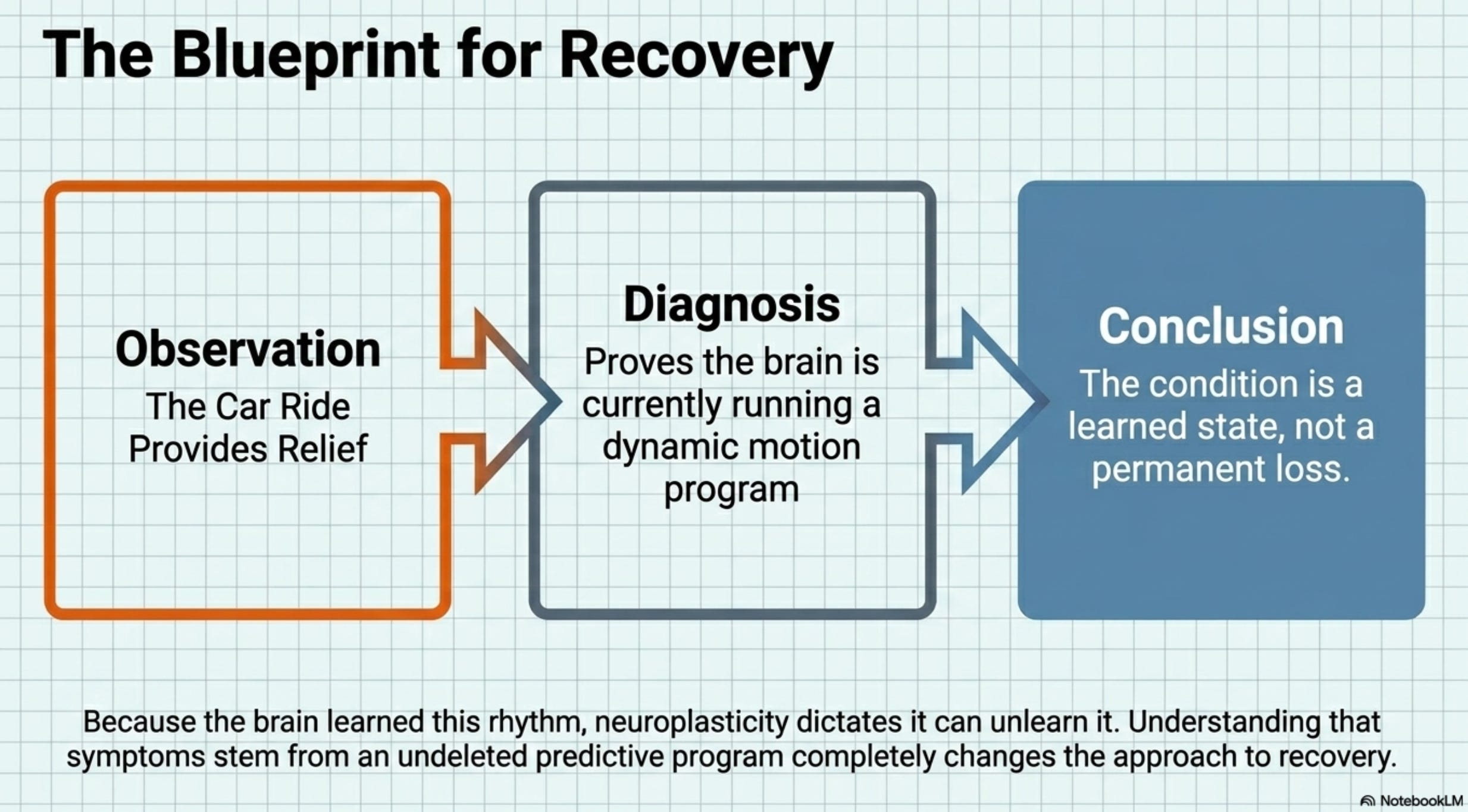
To break this loop, specialized vestibular rehabilitation must focus on disrupting the brain’s reliance on this phantom rhythm. By introducing targeted retraining protocols (Dai, Yakushin Chair, VR-SOS, Zero-Out Method, etc.), we can help the nervous system drop the outdated software patch.
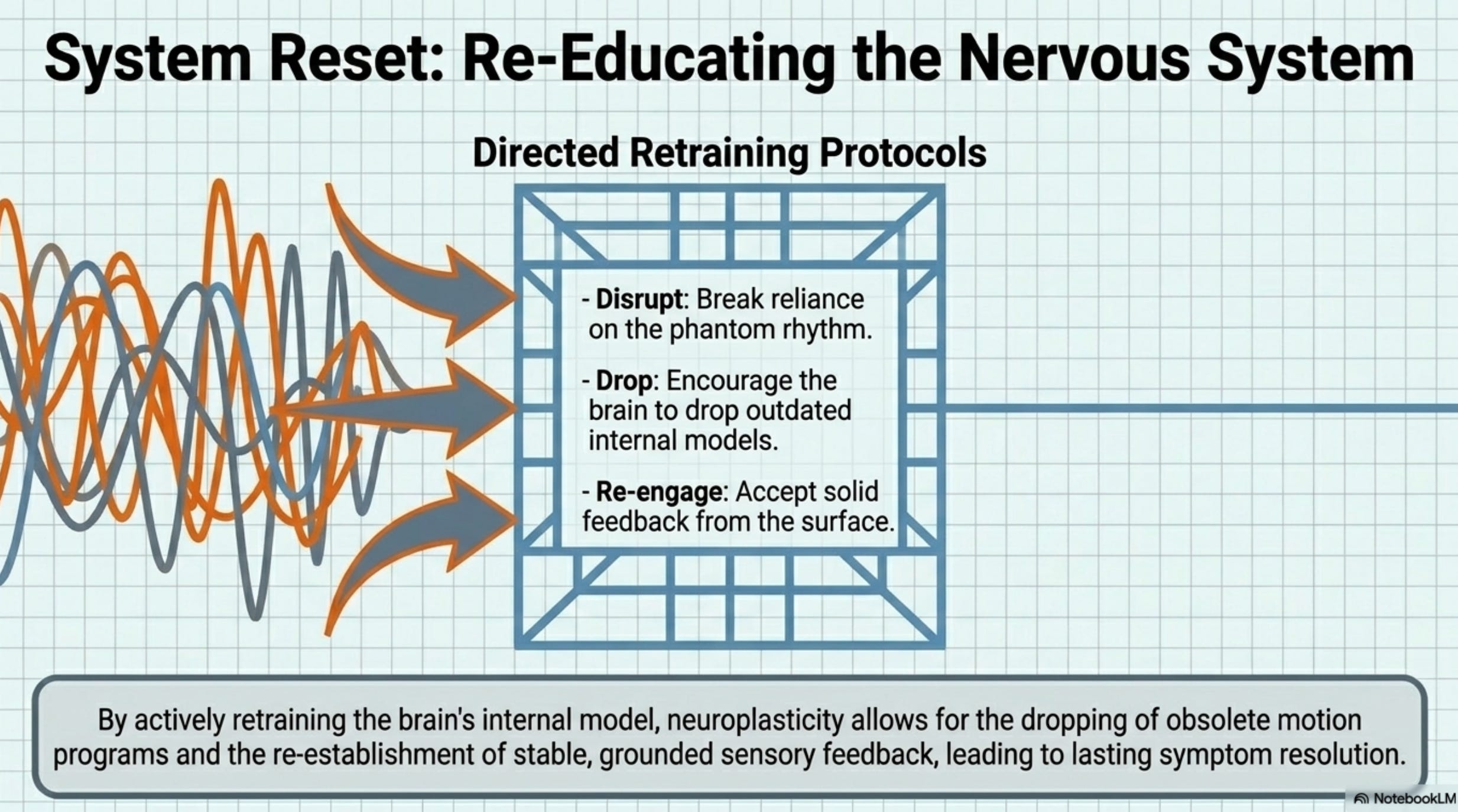
Instead of allowing the brain to stay locked in a state of sensory mismatch, specific exposures and movement strategies encourage the central nervous system to reduce its reliance on inaccurate internal models. This process re-educates the brain to accept the solid, non-moving feedback from the surface beneath you, clearing the pathway to optimize natural, stable balance.
very true. I think the treatment will be the same, but not the trigger. I proposed a completely different theory to MdDS. Can we discuss it and let me know your thoughts?
Fascinating info -- but frustrating for those of us with "spontaneous" MdDS, that is, the trigger was not motion-related.